Make napa cabbage doenjang soup with the cabbage you have
Key Takeaway
If you have 450g napa cabbage, make a pot of doenjang soup. With prepared anchovy broth, allow about 30 minutes from chopping to serving. Dissolve the paste first, soften the cabbage ribs, then add scallions and garlic.
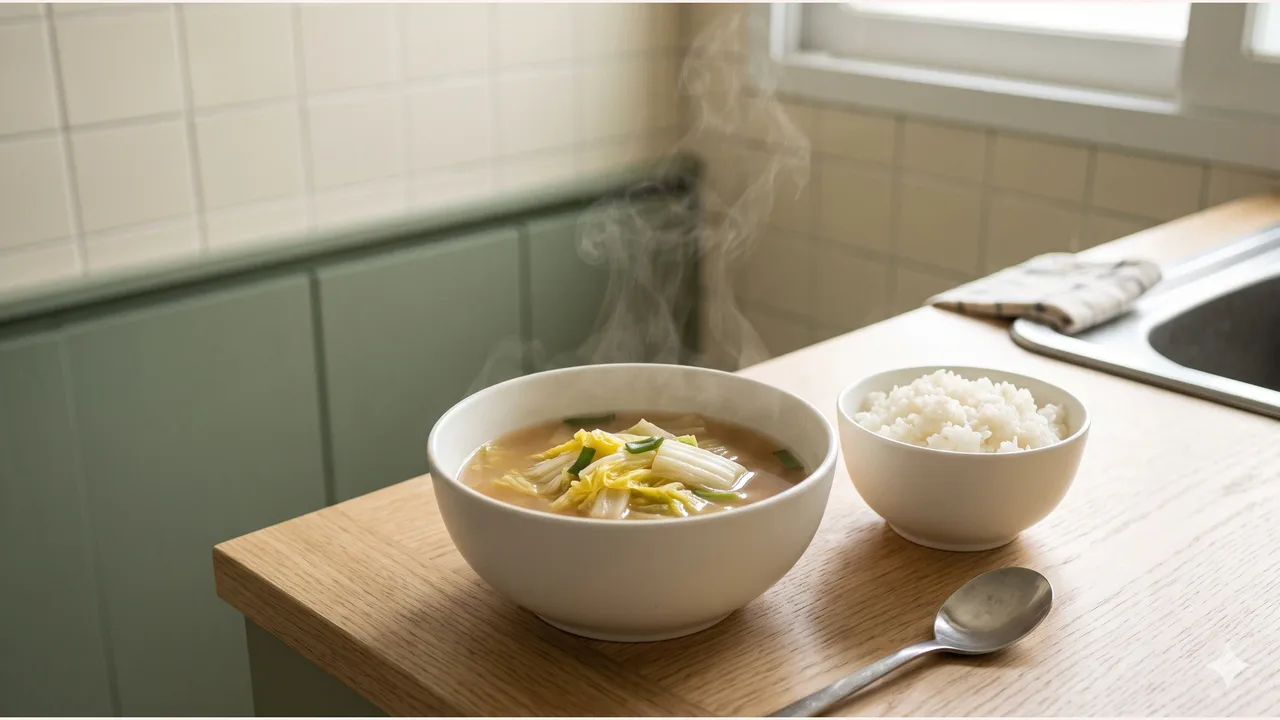
How much do you need to make soup with napa cabbage?
This makes 4 servings. Use fresh cabbage that has not been salted, wash off any soil, and then weigh it. Include both the ribs and leaves for different textures in the same pot.
Spoon units: T means 1 level Korean table spoon, approximately 15ml; t means 1 teaspoon, approximately 5ml.
| Ingredient | Amount | What to check |
|---|---|---|
| Fresh napa cabbage | 450g | Baby napa cabbage works at the same weight |
| Unsalted anchovy broth | 950ml | Prepare the broth and remove the anchovies beforehand |
| Doenjang | 2 tablespoons (Korean table spoons) | Use soybean paste rather than ssamjang |
| Gochujang | 1 teaspoon | Omit it to reduce the heat |
| Korean soup soy sauce | 1 tablespoon (Korean table spoon) | Start with 2 teaspoons and reserve 1 teaspoon for the final seasoning |
| Minced garlic | 1 teaspoon | Add during the final 5 minutes |
| Scallions | 20g | Cut into 5cm lengths |
The 950ml refers to prepared broth. Do not use that volume of undiluted concentrate or broth tablets. If using a packaged product, prepare it at the water-to-product ratio on its label, then measure out 950ml. If the broth is already salted, leave out the initial soup soy sauce and check the seasoning at the end.
How do you prepare the doenjang before turning on the heat?
Put 2 tablespoons doenjang and 1 teaspoon gochujang in a small white bowl. Take 100ml from the prepared 950ml broth and stir it into the pastes. This is part of the total broth, rather than extra liquid. Pour the remaining 850ml into the pot.
If lumps remain, set a strainer over the pot and press the mixture through with a spoon. Skip the strainer if you want to keep the soybean pieces. Stir up anything that has settled before pouring, and keep tasting spoons out of the seasoning bowl.
In what order should you cook the soup?
- Separate the cabbage leaves, rinse them under running water, and cut into 5–7cm pieces. Cut the 20g scallions into 5cm lengths and set them aside. Mix the pastes as described above. Split wide cabbage ribs lengthwise once more so their thickness is more even.
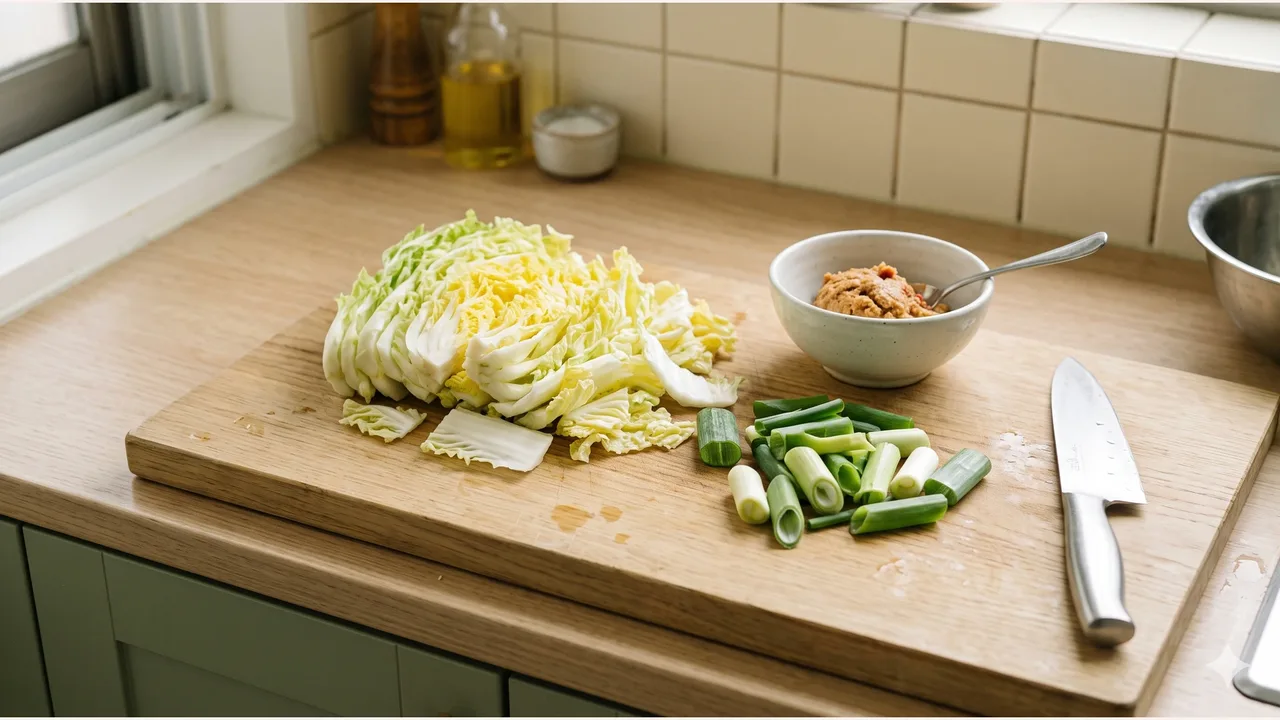
- Bring the 850ml broth and all the seasoning dissolved in 100ml broth to a boil in a stainless-steel pot over medium-high heat. Add 2 teaspoons soup soy sauce and the cabbage, then cover. Once the soup returns to a boil, reduce the heat to medium and cook for 10–15 minutes.
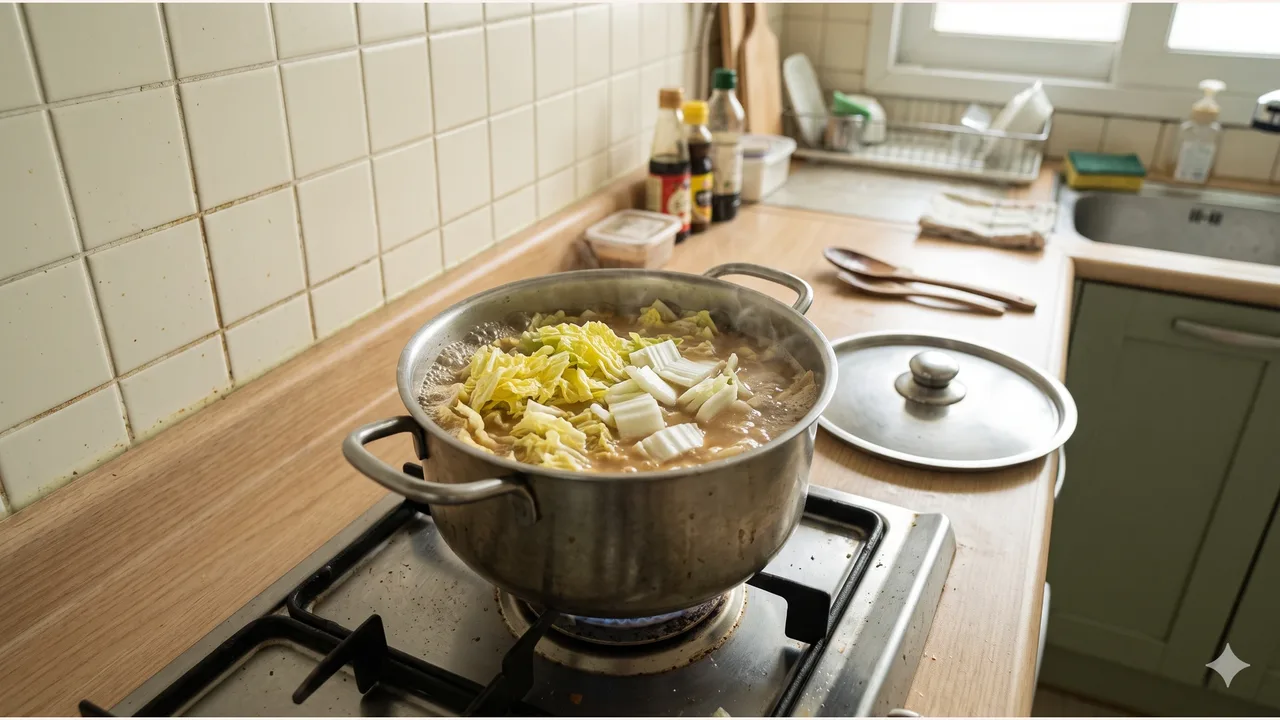
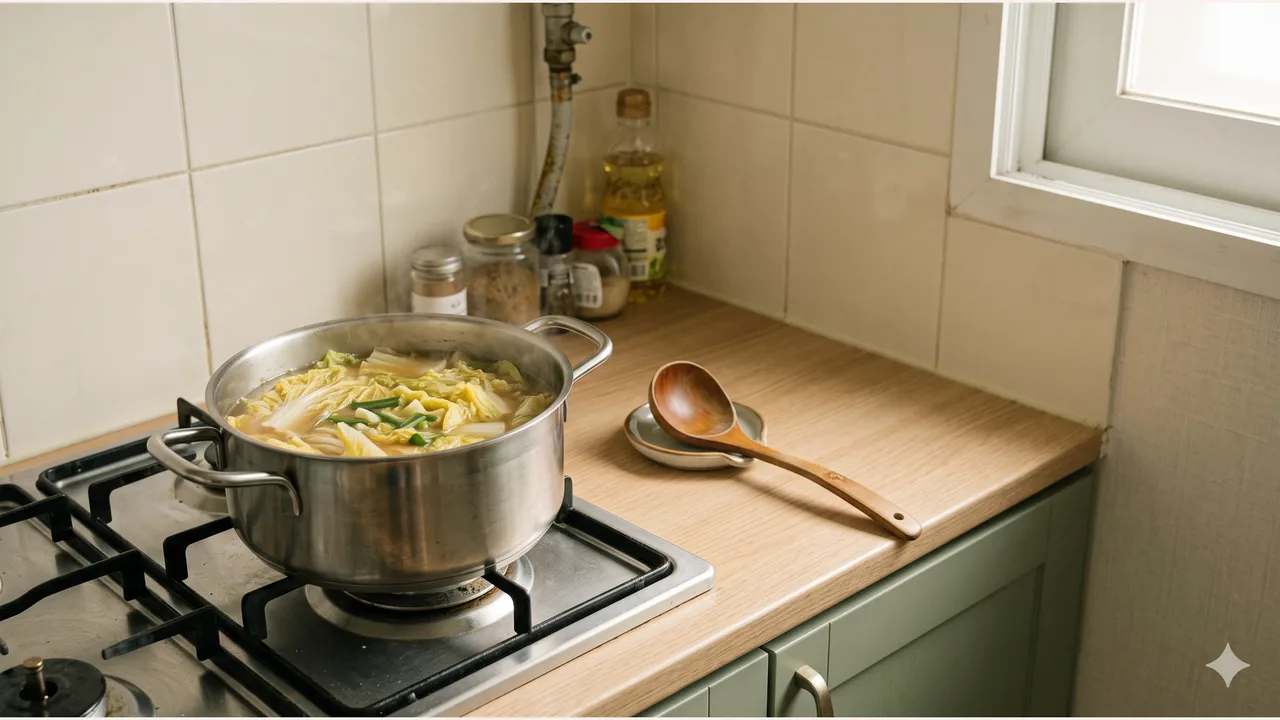
- Press a cabbage rib with chopsticks to check that it bends easily. Add the 20g scallions and 1 teaspoon minced garlic and cook over medium heat for another 5 minutes. Let a spoonful cool before tasting. Only if the soup needs more seasoning, add the reserved 1 teaspoon soup soy sauce, bring it briefly to a boil, and turn off the heat.
How do you avoid tough ribs or salty broth?
- Check the ribs before turning off the heat. The leaves can wilt while thick ribs remain firm, so press a rib before adding the final ingredients.
- Start timing after the soup returns to a boil. Counting the time it takes to recover from adding cold cabbage shortens the actual cooking time.
- Avoid increasing both the doenjang and soup soy sauce together. Salt levels vary between pastes, so reserve 1 teaspoon soy sauce and decide after tasting the finished broth.
- Keep the heat at medium after adding the cabbage so the broth does not reduce too far. If it threatens to boil over, uncover the pot and lower the heat.
How should you cool and store leftover soup?
Do not leave the whole pot at room temperature while waiting for it to cool completely. Divide the soup among clean, shallow containers, cool it quickly, and refrigerate it. The Ministry of Food and Drug Safety advises keeping the refrigerator below 5°C.
When reheating, transfer only the portion you will eat to a pot and bring it to a boil. Use a serving utensil separate from any spoon used for eating. Write the storage start time on the container so you can keep track of it.
Frequently Asked Questions
Can I use baby napa cabbage left over from lettuce wraps?
Use 450g of unsalted baby napa cabbage. Weigh it instead of counting heads, since leaf sizes vary, and check that the thick ribs have softened.
What if the soup is salty after I add all the soup soy sauce?
Add 50ml water, bring it back to a boil, and taste a spoonful. If it is still salty, add another 50ml water and boil again without adding salt or doenjang.
Can I leave out the gochujang?
Leaving out the 1 teaspoon gochujang reduces the red tint and heat. Keep the 2 tablespoons doenjang, start with only 2 teaspoons soup soy sauce, and decide whether to add the remaining teaspoon after the cabbage cooks.