Got Pork and Sour Kimchi? Simmer a Pot of Kimchi Jjigae
This page contains Coupang Partners affiliate links; the operator may earn a commission.
Key Takeaway
With 200 g of pork and sour kimchi, you can have kimchi jjigae in about 30 minutes. Boil the pork in rice-rinse water first, then add kimchi, doenjang, and gochugaru to build the broth.
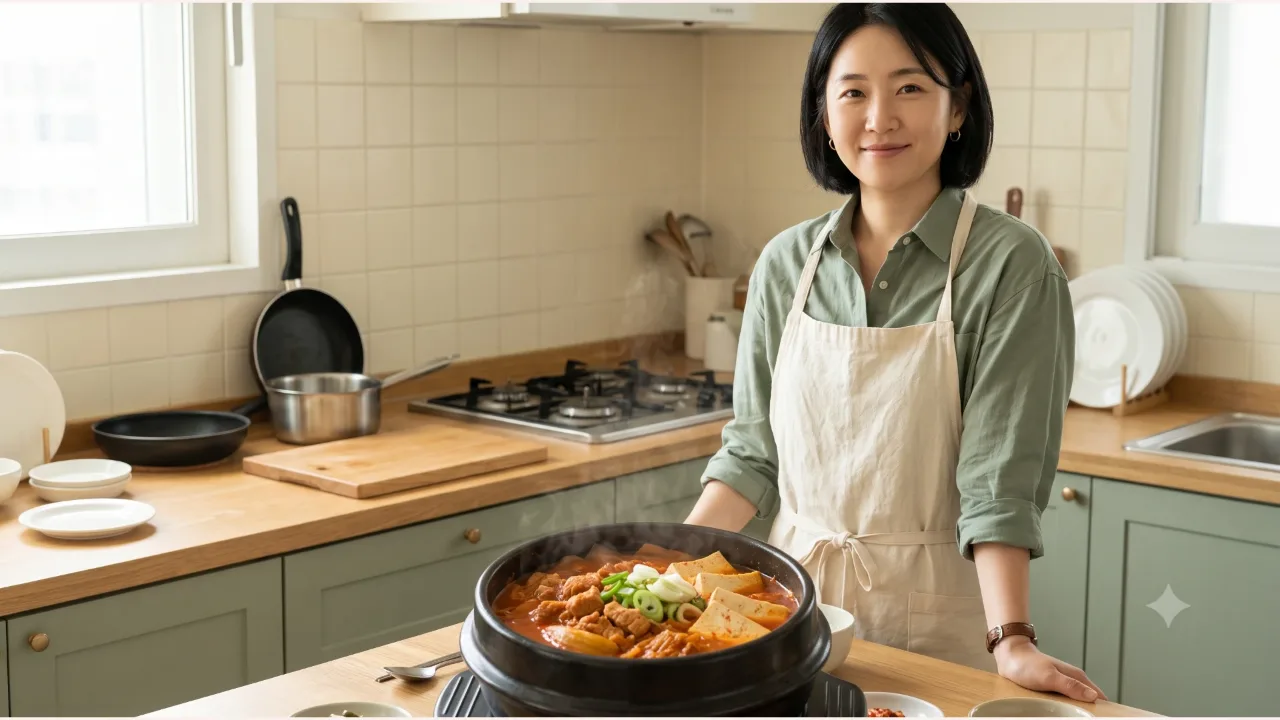
How do you cook it with pork and sour kimchi, and what ingredients do you need?
This makes 2 servings. Start with 100 g of kimchi and adjust the final seasoning to how salty the kimchi is.
Measurements: a tablespoon here means one level ordinary Korean table spoon (about 15 ml), and a teaspoon means one teaspoon (about 5 ml).
| Ingredient | Amount | Notes |
|---|---|---|
| Pork shoulder | 200 g | Cut small, for stews |
| Sour kimchi | 100 g | Chop small |
| Rice-rinse water or plain water | 360 ml | 2 cups in a 180 ml paper cup |
| Mirin-style cooking wine | 1 tablespoon | Mix into the meat |
| Doenjang (Korean soybean paste) | 1/2 tablespoon | Even if the doenjang is salty, don't go over 1/2 tablespoon |
| Gochugaru (Korean chili flakes) | 1 tablespoon | Cut to 1/2 tablespoon if the kimchi is very spicy |
| Minced garlic | 1 tablespoon | |
| Soy sauce | 1 tablespoon | Start with only 1/2 tablespoon and add the other 1/2 tablespoon at the end after tasting |
| Green onion | 1/2 stalk | Add at the end |
| Tofu (optional) | 1/2 block | If you add it, readjust the water and seasoning |
How do you simmer it step by step?
- Mix the cooking wine into the pork, then chop the kimchi and green onion. Keep the meat in the refrigerator while you prep.
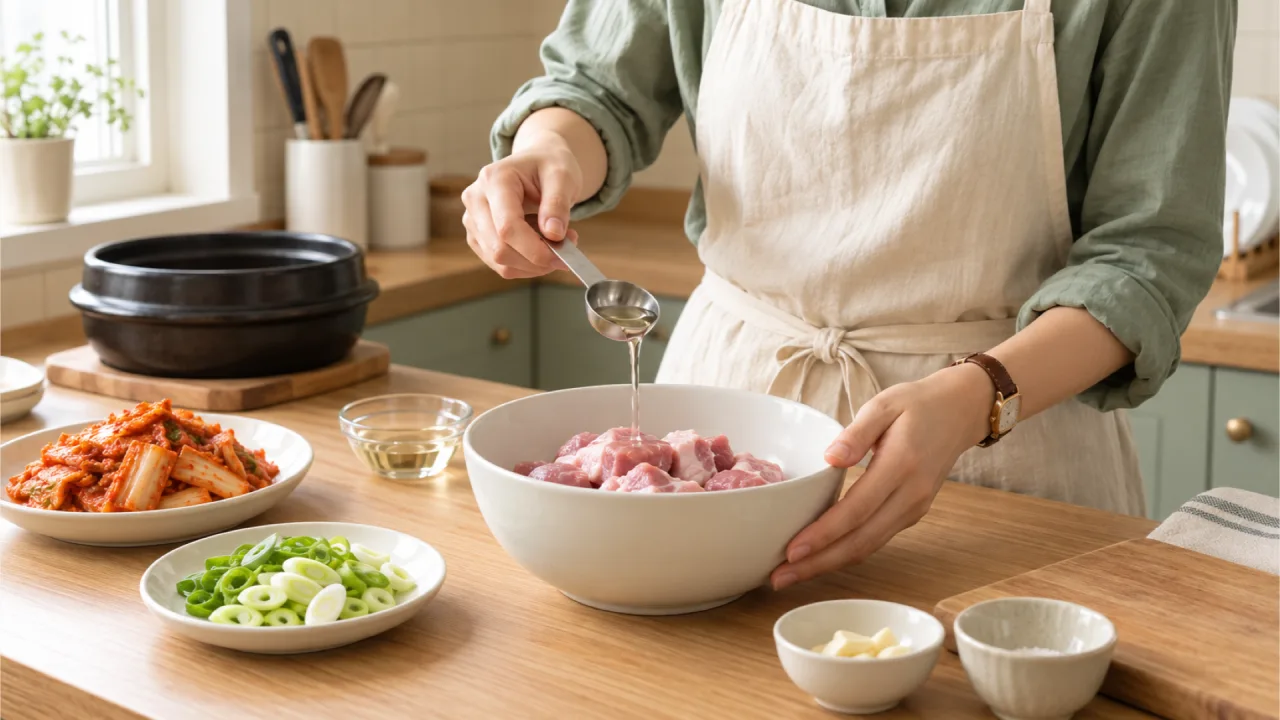
- Bring the rice-rinse water to a boil in a pot and add the meat. When it comes back to a boil, lower the heat and dissolve in the doenjang.
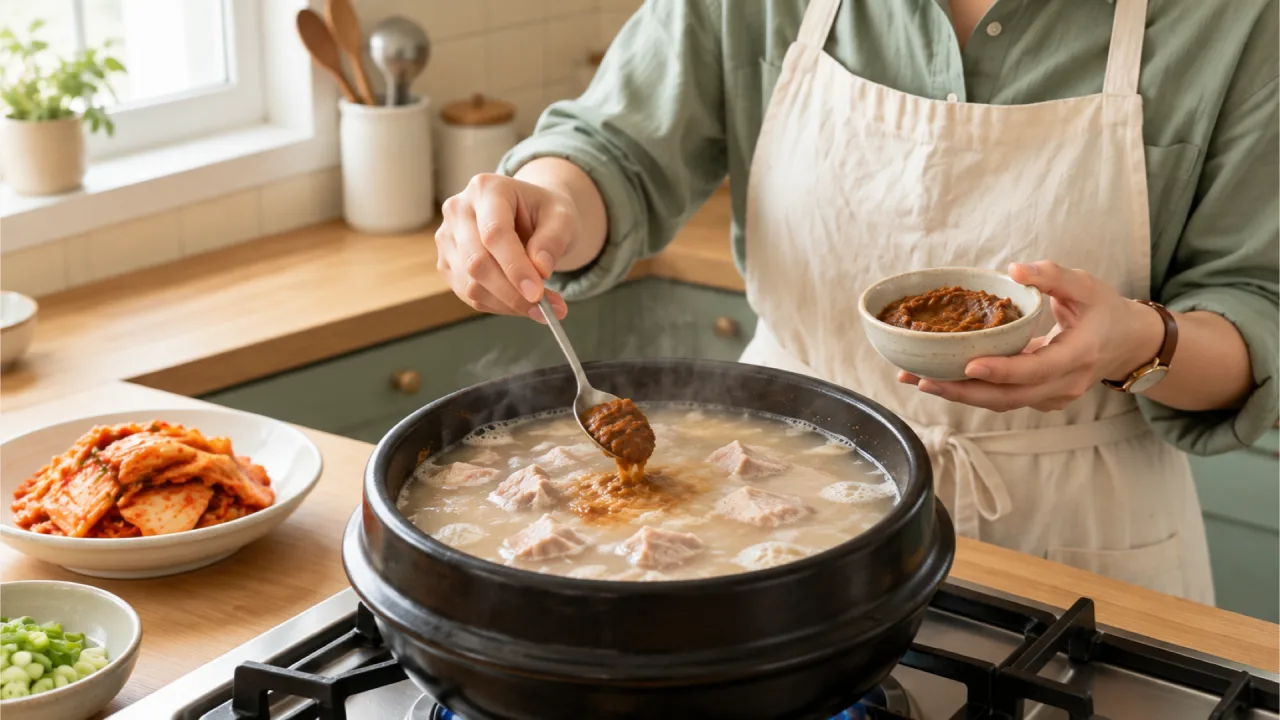
- While the meat cooks, skim the large foam off the surface and add the kimchi. Boil until the kimchi softens, and if the water runs low, add hot water 3 tablespoons at a time.
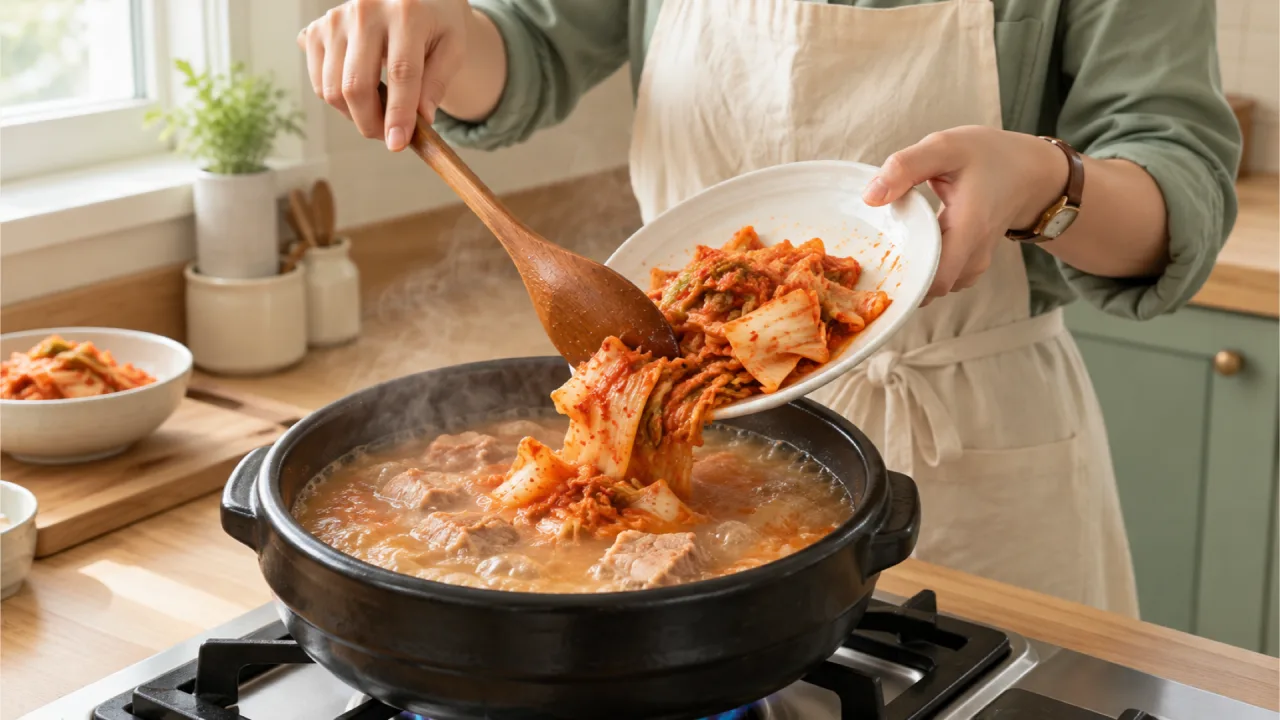
- Add the gochugaru, minced garlic, and 1/2 tablespoon of soy sauce and simmer. If you are using tofu, add it now and cook until it is hot in the center.
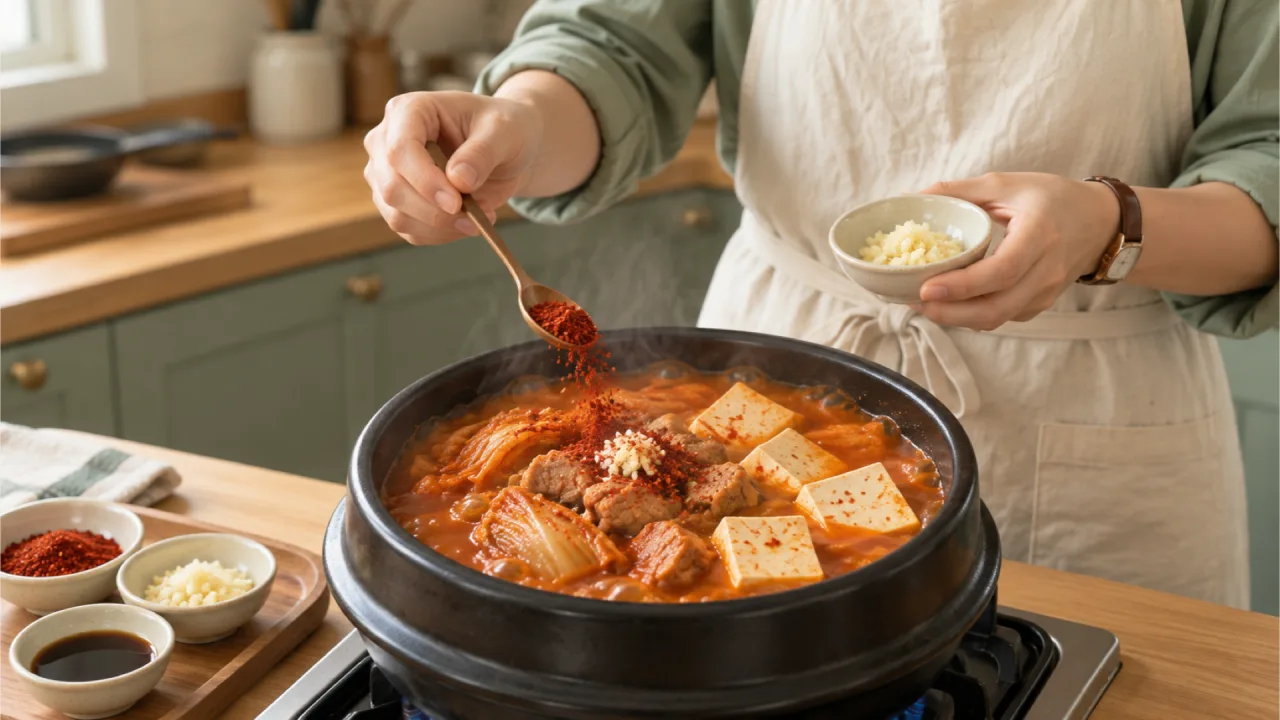
- Check that the core temperature of the meat has stayed at 75°C or higher for at least 1 minute. Finally, taste it, and only if it is bland, add the remaining 1/2 tablespoon of soy sauce, then add the green onion and bring it to a quick boil.
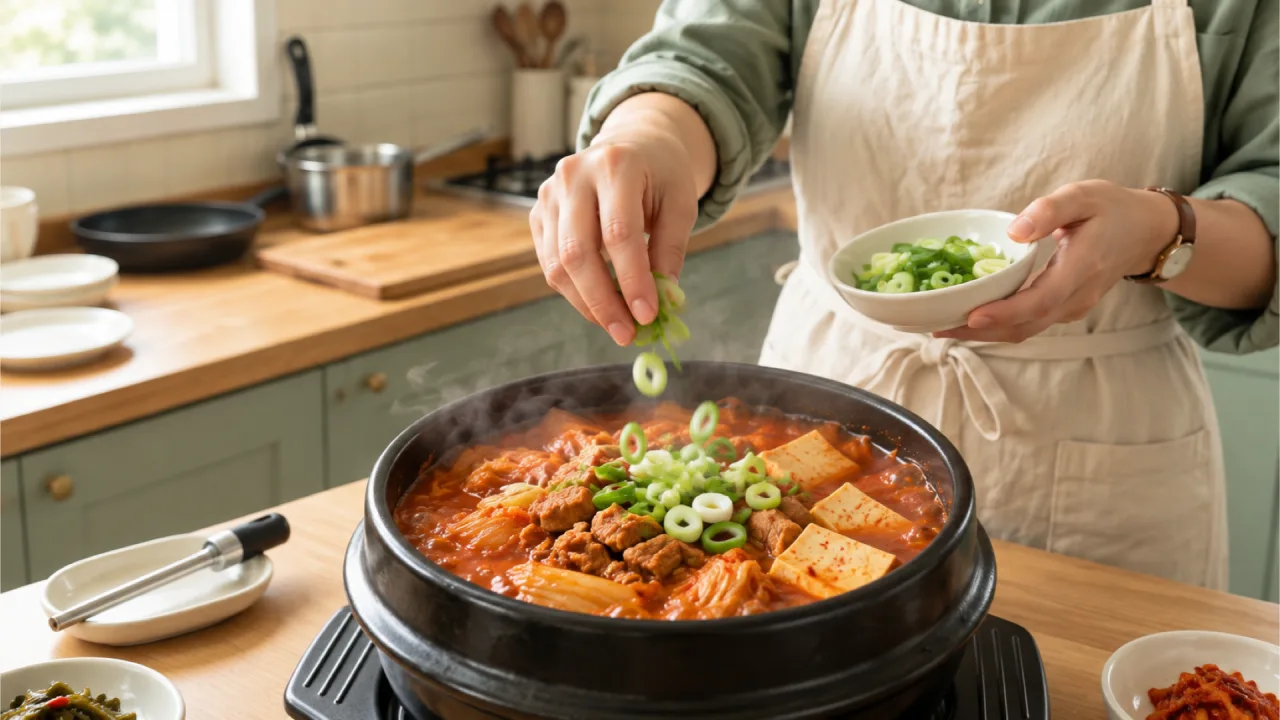
What if the seasoning or flavor falls short?
- Using too much soybean paste or soy sauce can make it taste bitter. Start with only 1/2 tablespoon of doenjang and 1/2 tablespoon of soy sauce.
- The initial 360 ml of water can run short depending on how far it boils down. Add hot water 3 tablespoons at a time so the bottom of the pot doesn't show, and taste at the end.
- Don't judge doneness by the color of the meat. Cook the thickest part to a core temperature of 75°C or higher for at least 1 minute.
How do you store leftover jjigae?
Divide it into shallow containers in portions you'll eat in one sitting and refrigerate within 2 hours. Don't let it cool overnight at room temperature, and bring it to a full boil again before eating.
How do you measure 100 g of sour kimchi and 360 ml of water?
Weigh the sour kimchi on a scale to get 100 g. A handful differs with hand size and how thickly you cut, so don't use it as the measure. Also check that the pot isn't packed too tightly once the meat in the table goes in with it. Chop large kimchi stalks small so they are easier to eat together with the meat when you ladle up the broth. This isn't a recipe where you pour in lots of extra kimchi juice, so start by considering the seasoning and saltiness already on the kimchi itself.
Here, 360 ml of water means 2 cups in a 180 ml paper cup. Pouring twice with a mug of another size, or filling a 240 ml measuring cup, changes how strong the broth is at the start. If you have a measuring cup with markings, set the milliliters in the table as your guide. If you don't have rice-rinse water, start with plain water, and don't increase the doenjang from the beginning to make the flavor richer.
What should you watch for in an order where you boil instead of stir-fry first?
The order differs from kimchi jjigae that starts by stir-frying the meat and kimchi in oil. Here you put the meat into already boiling water and watch for it to come back to a boil. Right after cold meat goes in, the water can stop moving as much, so don't judge cooking time by the first moment it boiled. Dissolve the doenjang fully rather than leaving it in clumps, so the saltiness doesn't vary much from spoonful to spoonful of broth.
If you keep ladling out the broth while skimming the large foam, the water you started with shrinks quickly. Rather than focusing on removing every bit of foam, watch that the ingredients are cooking in the broth and that the bottom isn't drying out. While the kimchi boils until soft, check the doneness of the meat by its thickest piece. Don't decide all the meat is done from the color of one small piece.
What should you adjust first if it is too salty or too thin?
In a pot with a wide bottom, the same amount of broth spreads thin and can reduce faster. Even if the water in the recipe looks like too little, don't pour in a full big pot's worth from the start. Instead, watch whether the bottom shows while it boils and top it up 3 tablespoons at a time. After adding water, stir well and bring it back to a boil before tasting, so the flavor evens out among the hot ingredients.
The doenjang and kimchi already carry saltiness, so save the soy sauce for the final adjustment. If the broth has boiled down and turned salty, don't add more soy sauce or doenjang. If you added the optional tofu, taste the broth again once the tofu is hot in the center. The jjigae can also lose liquid when you reheat it, so check the thickness as you warm it rather than expecting the same seasoning you had when you first finished.
How do you choose the cookware you need?
Use a pot that still has room at the top after you add the broth and kimchi. A narrow pot that is only deep can be awkward for stirring. Choose a size where you can slowly check the bottom with a ladle, and be careful of the heat coming off the handle.
Frequently Asked Questions
What if the kimchi jjigae is too sour?
Add 1/4 teaspoon of sugar to soften the sourness. Don't add it all at once; taste as you go and add 1/4 teaspoon at a time.
What if I don't have rice-rinse water?
You can use the same amount of plain water. Boil the pork first, then add 1/2 tablespoon of doenjang (Korean soybean paste) to build the flavor of the broth.
Do I have to add tofu?
No. It is optional. If you have it, add it at the end and bring the pot to a quick boil.
Sources & Verification Date
- 10000 Recipe: Pork kimchi jjigae recipe page · Verified
- Ministry of Food and Drug Safety: Food poisoning prevention guide · Verified
All materials have been verified from official announcements and may have changed since verification.