Got a Zucchini? Make Stir-Fried Korean Zucchini (Aehobak-bokkeum)
This page contains Coupang Partners affiliate links; the operator may earn a commission.
Key Takeaway
With one Korean zucchini (aehobak), you can make a tender stir-fried side dish in about 10 minutes. It makes 2 servings; cook it with 2 tablespoons of water and don't keep stir-frying once the edges turn translucent.

How much of each ingredient do you need?
Measurements: a tablespoon here means one level ordinary Korean table spoon (about 15 ml), and a teaspoon means one teaspoon (about 5 ml).
| Ingredient | Amount | Notes |
|---|---|---|
| Korean zucchini | 1, about 280 to 340 g | |
| Minced garlic | 1 teaspoon | |
| Chives | 1 stalk | |
| Cooking oil | 1 tablespoon | |
| Salted shrimp (saeu-jeot) or salt | 2 teaspoons salted shrimp or 1/2 teaspoon salt | Season with one or the other |
| Water | 2 tablespoons | If the pan dries out, add 1 tablespoon at a time |
| Sesame oil, sesame seeds | 1 teaspoon each |
How do you make it step by step?
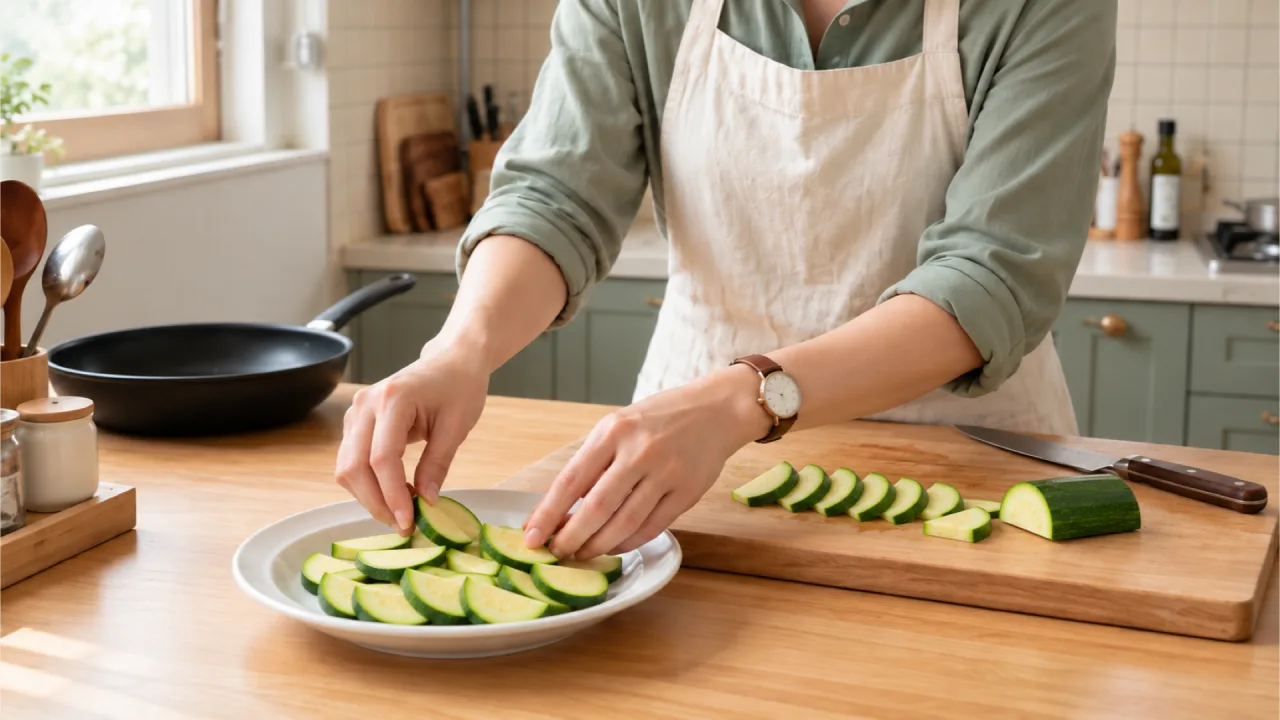
- Halve the zucchini lengthwise and cut it into half-moons 6 to 8 mm thick.
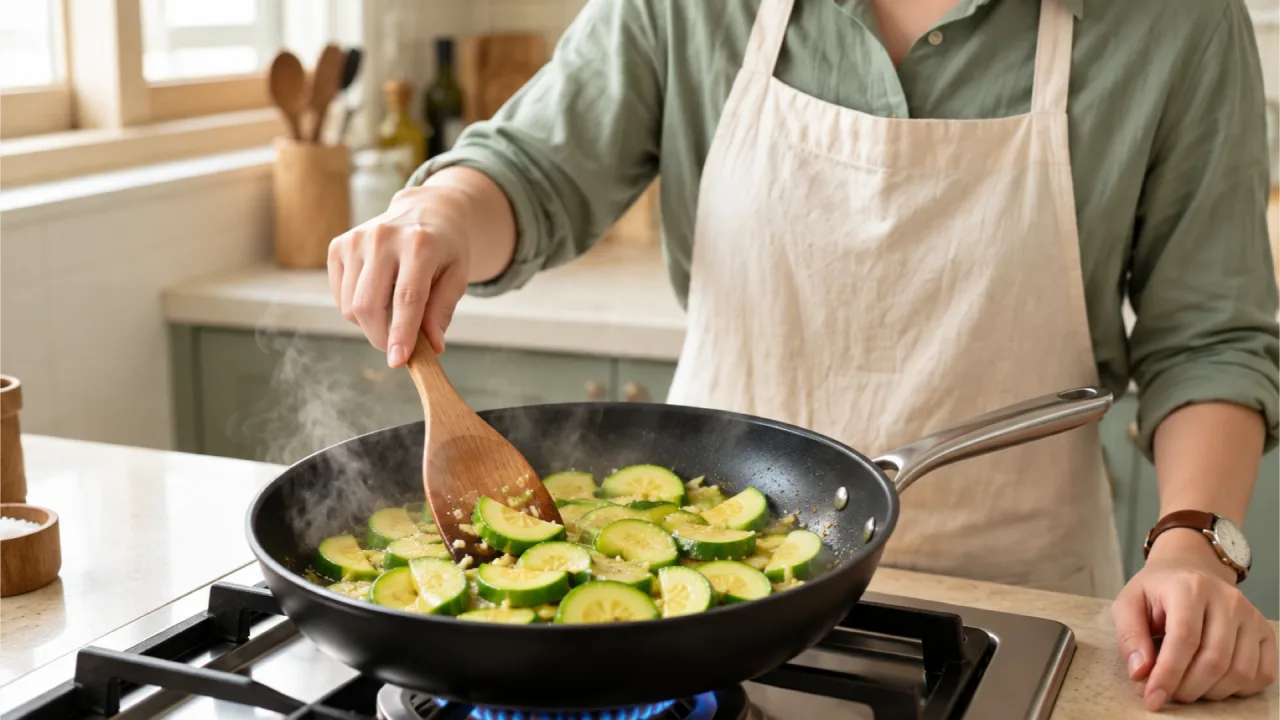
- Add the cooking oil to a pan and, over medium-high heat, stir-fry the zucchini, garlic, and salted shrimp or salt for 2 to 3 minutes.
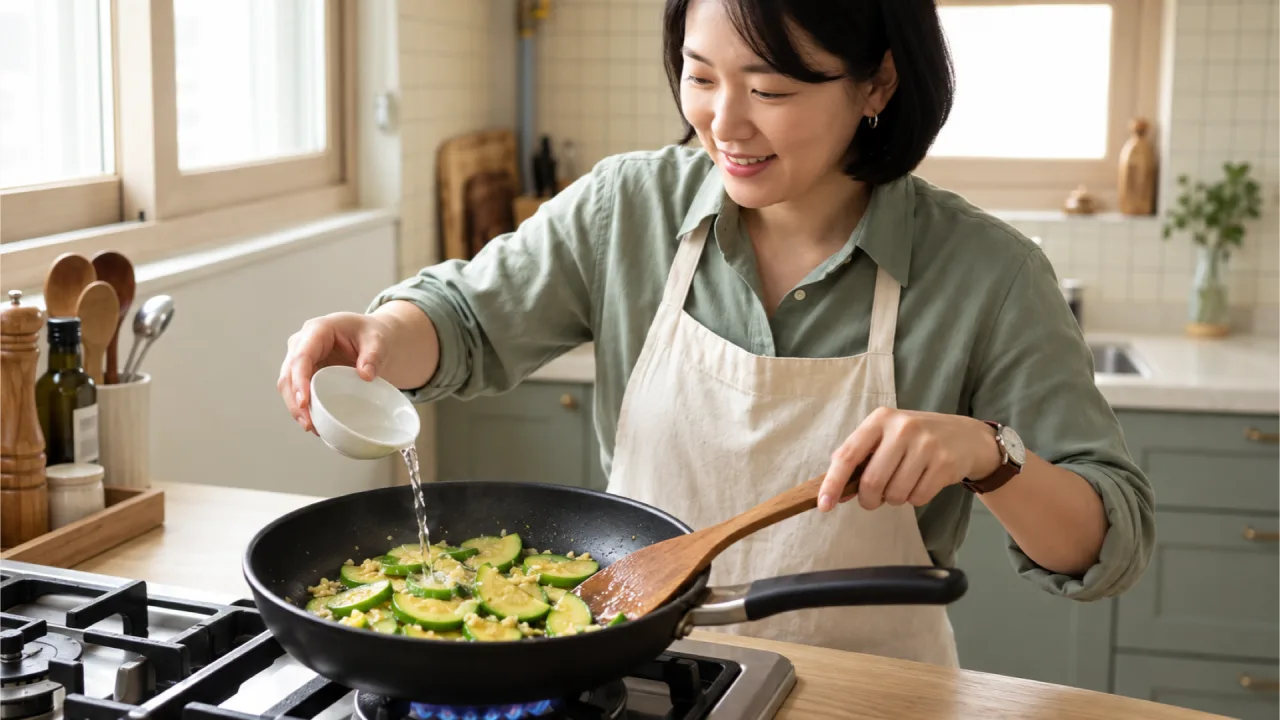
- Add 2 tablespoons of water and mix. If the pan dries out, add 1 tablespoon at a time.
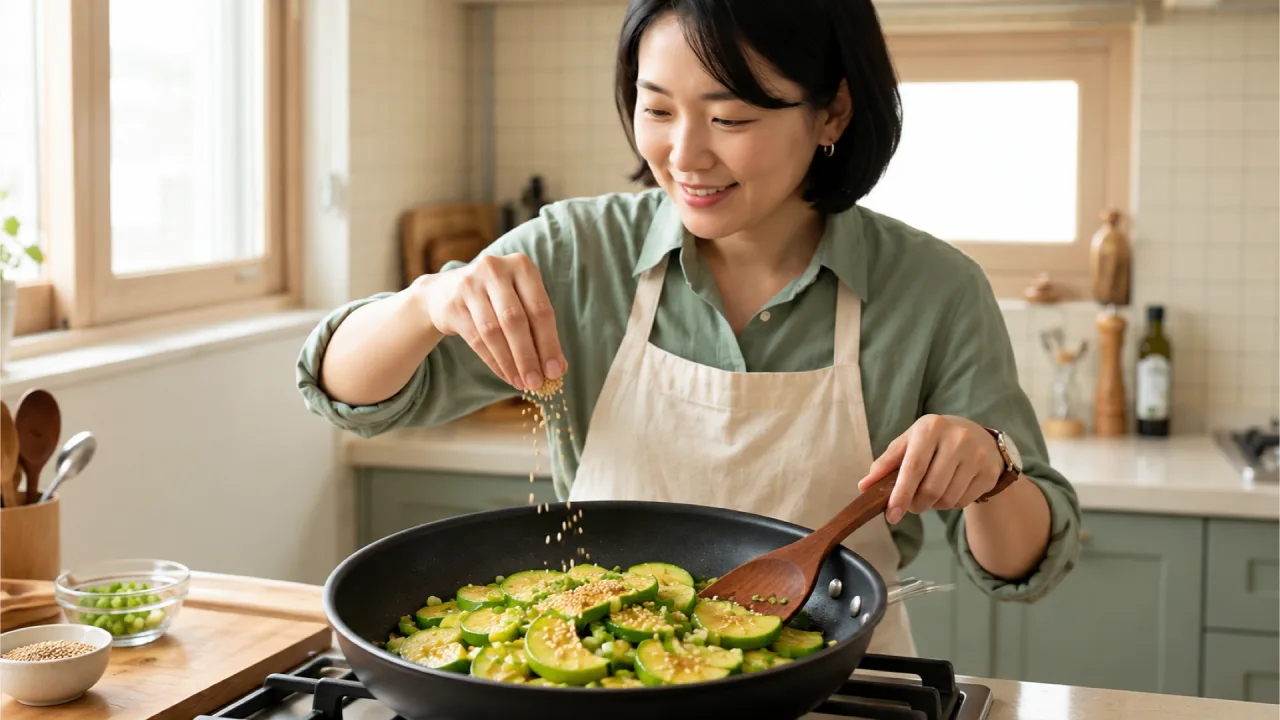
- Add the chives, sesame oil, and sesame seeds and stir-fry 2 to 3 minutes more. When the zucchini is tender and translucent, taste, and turn off the heat.
What should you check to avoid mistakes?
- Saltiness varies by salted shrimp product, so don't go over 2 teaspoons, and if it is bland, add 1/2 teaspoon at a time.
- If you have a shrimp allergy, season with salt.
- Refrigerate leftover side dishes within 2 hours.
Why cut the zucchini to a similar thickness?
If the half-moon pieces vary in thickness, the thin ones are already soft while the thick ones stay firm. Before you start cutting, split the zucchini lengthwise and set the flat side on the cutting board so it doesn't roll around. This isn't a dish that needs peeling to get tender, so cut the washed zucchini as it is. Trim the rough ends into bite-friendly shape, and focus on matching thickness rather than mixing pieces of different sizes.
This side dish is based on one zucchini within the weight range in the table. If you put the full amount of salted shrimp on an unusually small zucchini, it can taste salty. Conversely, with a large zucchini, rather than automatically extending the cooking time, look at the thickness of the pieces and how tender they get in the pan. It is better to leave room to add 1/2 teaspoon at a time at the end to adjust the seasoning.
How do you choose between salted shrimp and salt?
Salted shrimp adds not just saltiness but also a fermented seafood aroma. If that aroma is too much for you, or you have a shrimp allergy, season with salt as the table allows. Swapping 2 teaspoons of salted shrimp for 2 teaspoons of salt is not an equivalent adjustment. Put in just 1/2 teaspoon of salt and taste after the zucchini is cooked. Even if you change the seasoning, keep the order of stir-frying the zucchini and then adding water.
The amount of brine clinging to the salted shrimp and its saltiness can differ by product. When you first add it, don't heap it up on the measuring spoon; level it off and add just 2 teaspoons. If it tastes bland at the end, mix it evenly in the pan and check again. Keep the seasoning at the bottom moving along with the zucchini so that a salty spot doesn't stay on one side.
Is it still a stir-fry if you add water?
The 2 tablespoons of water isn't enough to boil the zucchini like a soup. It is just enough to keep the pan from drying out, which reduces burning of the garlic, and to help the inside of the zucchini soften. Evaporation differs by pan, so don't pour in a lot at once; add 1 tablespoon when the bottom dries out. If you put in zucchini that is still wet, the leftover wash water goes in too, so it is better to shake off the moisture first.
To judge doneness, look at the edges of the pieces rather than how long it has been on the heat. When the color turns translucent and the pieces bend softly as you move them with the spatula, it is cooking through well. You don't need to stir-fry until the shape collapses or the seed part completely breaks down. After adding the sesame oil and seeds at the end, mix just enough for the aroma to spread. If you leave the finished dish in the hot pan for a long time, residual heat keeps cooking it, so move it to a serving dish.
How do you choose the cookware you need?
A stir-fry pan big enough that the zucchini doesn't pile in layers makes it easier to see how it is cooking. If the pan bottom is too thin, one side can burn first, so adjust the heat as you cook. Use a spatula with rounded corners to scoop and mix so you don't mash the softened pieces.
Frequently Asked Questions
Do I really need salted shrimp?
You can season with salt or fish sauce instead. Instead of 2 teaspoons of salted shrimp, start with 1/2 teaspoon of salt and adjust 1/4 teaspoon at a time.
A lot of liquid is forming. What should I do?
Don't add lots of water at once; turn off the heat as soon as the zucchini is cooked.
Can I add onion?
You can add 1/4 of an onion, thinly sliced, but it isn't part of the basic amounts in this article.
Sources & Verification Date
- Reference for aehobak-bokkeum ratios and method · Verified
- Ministry of Food and Drug Safety: Food poisoning prevention guide · Verified
All materials have been verified from official announcements and may have changed since verification.