Got Eggs? Make Steamed Eggs (Gyeran-jjim) in an Earthenware Pot
This page contains Coupang Partners affiliate links; the operator may earn a commission.
Key Takeaway
With 3 eggs and 100 to 150 ml of water, you can make ttukbaegi (earthenware pot) gyeran-jjim in about 15 minutes. The key is to stir until it turns soft and curdy, then cover it and cook over low heat.
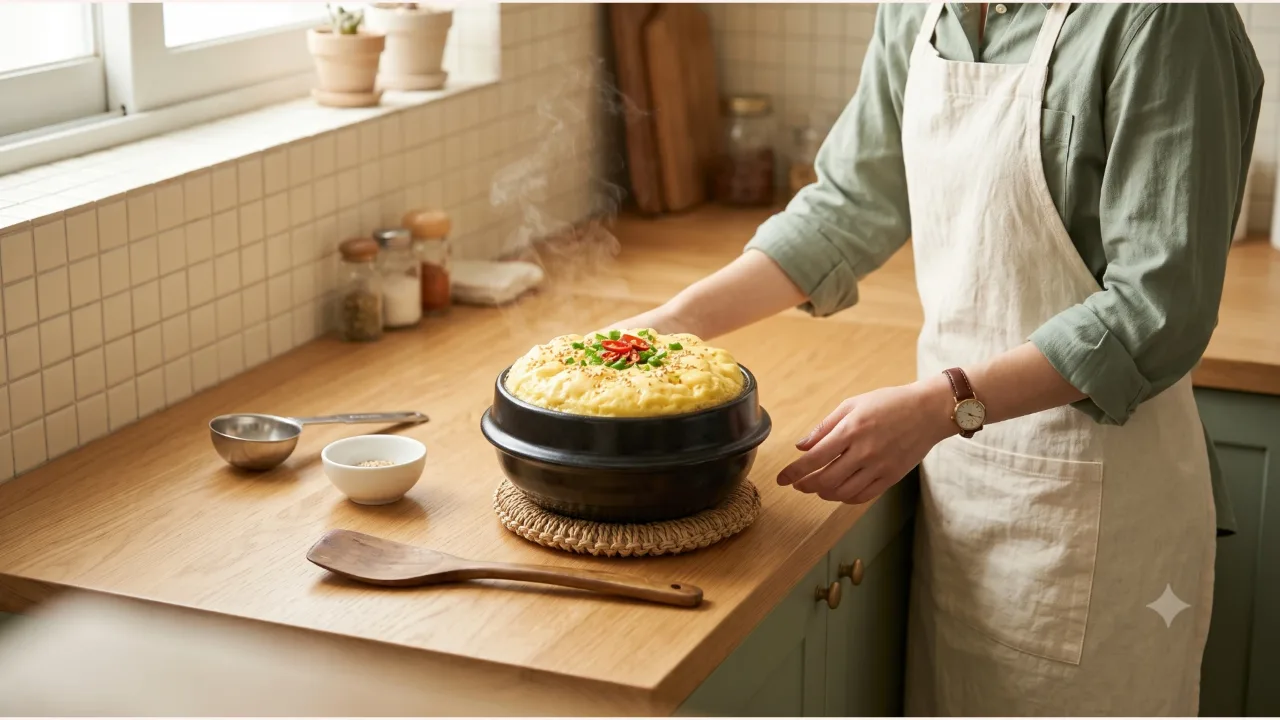
How do you cook it with the eggs you have, and what is the ratio?
This makes 2 servings.
Measurements: a tablespoon here means one level ordinary Korean table spoon (about 15 ml), and a teaspoon means one teaspoon (about 5 ml).
| Ingredient | Amount | Notes |
|---|---|---|
| Eggs | 3 | |
| Water | 100 to 150 ml | Together with the beaten egg, fill the pot no more than 70% |
| Salt | 1/3 teaspoon | Based on 3 large eggs. If it comes out salty, cut it to 1/4 teaspoon next time |
| Sugar | 1/2 teaspoon | Optional |
| Chives | 1 stalk | 1/2 stalk of green onion also works |
| Sesame oil, sesame seeds | 1/2 teaspoon each | For finishing |
How do you cook it step by step?
- Beat the eggs and mix in the salt, sugar, and water.
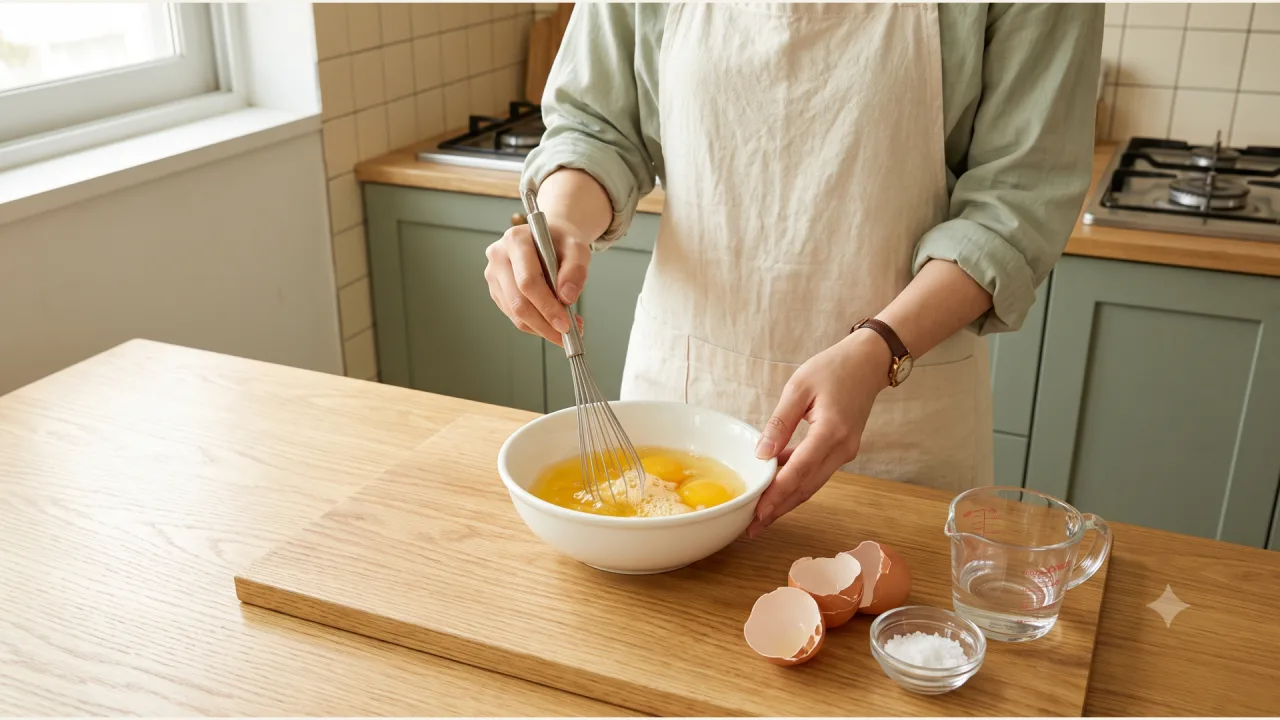
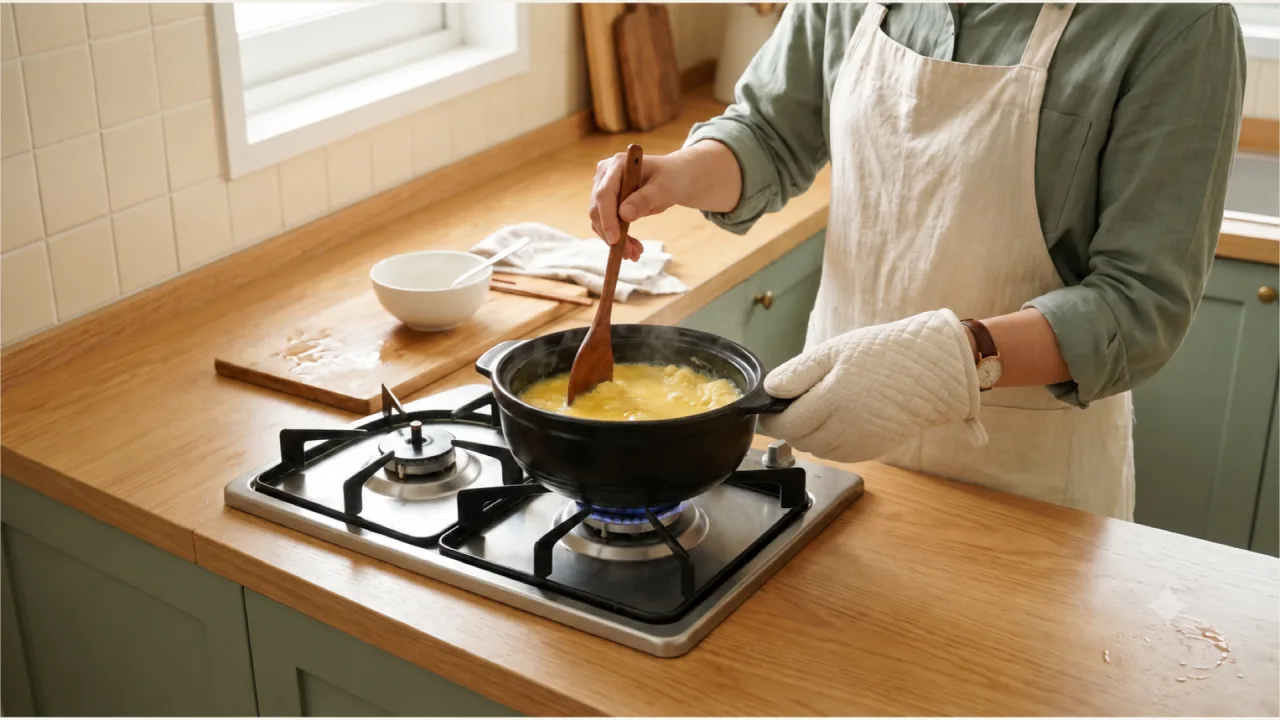
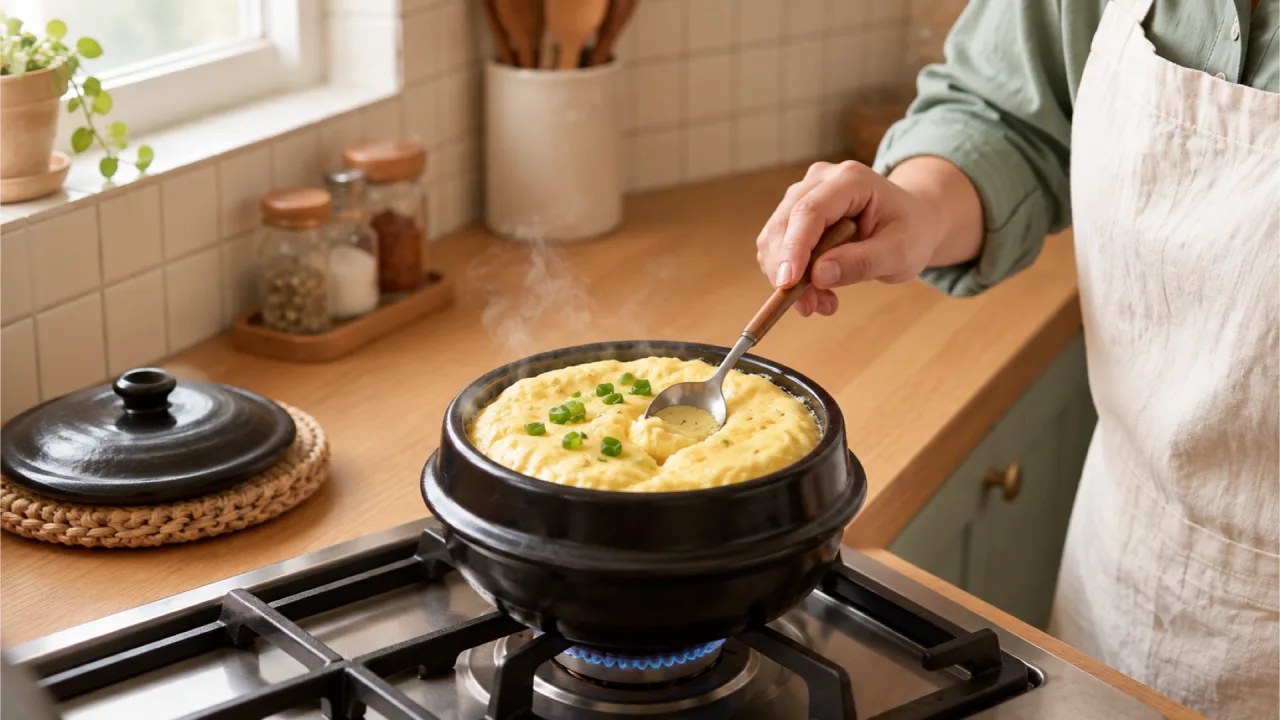
- Pour it into the ttukbaegi and stir over medium heat until it turns soft and curdy.
- Add the chives and put the lid on.
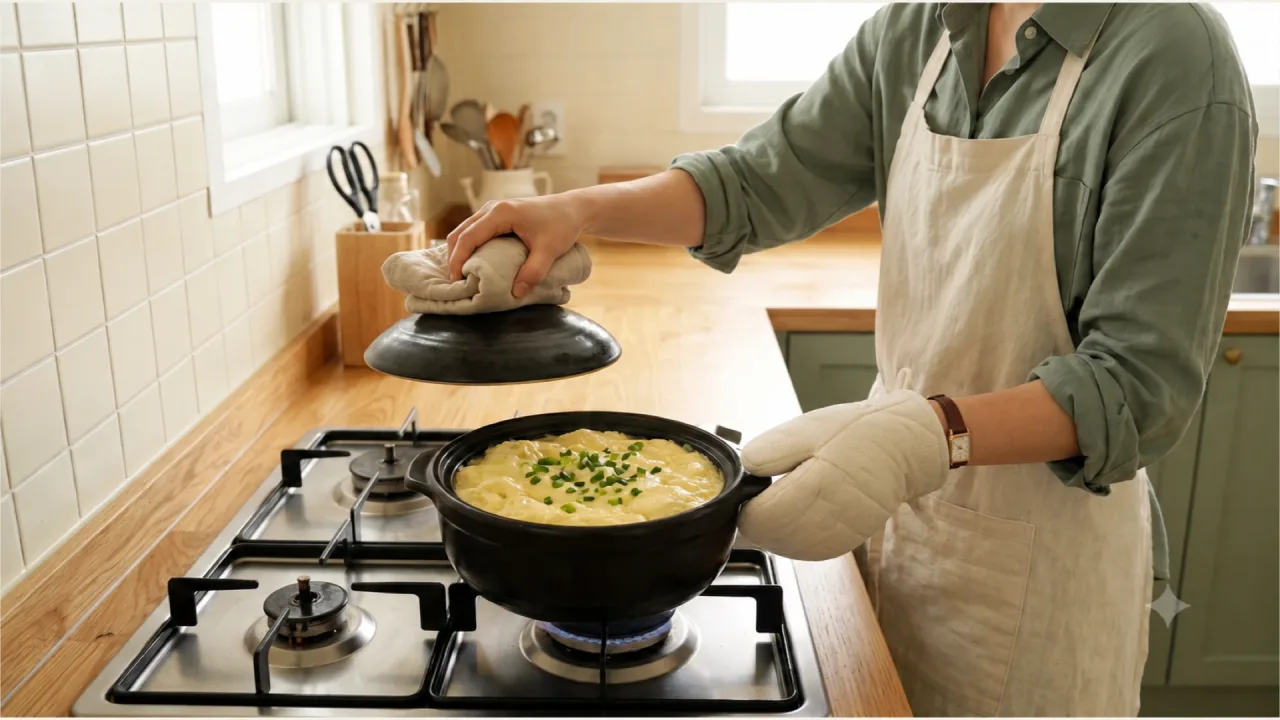
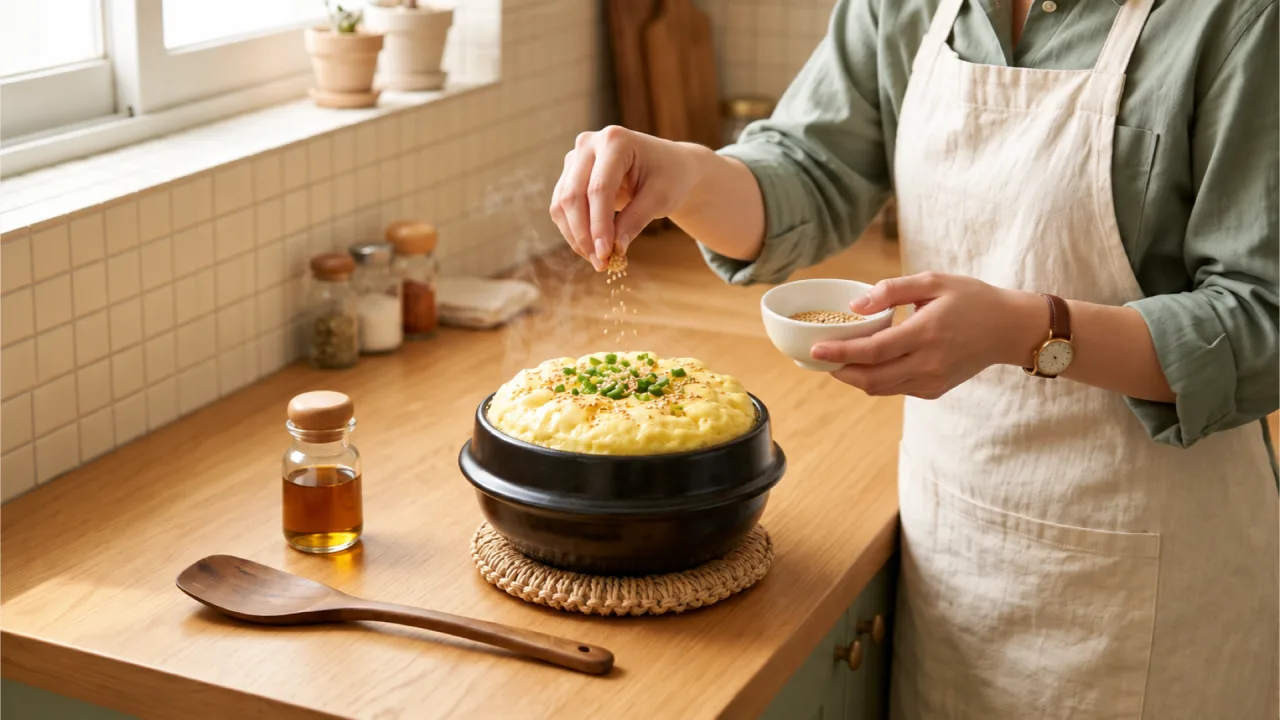
- Lower the heat and cook for 4 to 5 minutes. Gently open the center a little, and keep cooking until no liquid egg runs out.
- Finish with sesame oil and sesame seeds.
What should you watch out for to avoid mistakes?
- Fill the pot with egg mixture only up to 70% so it doesn't boil over. If you add more water, the cooking time may go up too.
- High heat is what makes the bottom burn and the egg sink.
- Cook the egg thoroughly all the way through.
What should you do with leftover steamed egg?
Divide the leftovers into shallow containers and refrigerate within 2 hours instead of leaving them out at room temperature. Take out only what you will eat and reheat it until hot all the way through.
Why should you look at the pot size and the amount of water together?
Even with the same three eggs, the volume of the egg mixture changes with egg size. Don't put the pot on the heat just because you added the stated amount of water; first look at how high the mixed egg comes up in the ttukbaegi. If there is no room at the top for it to puff up, it can boil over while the lid is on. If you have a lot of egg mixture, switch to a bigger pot instead of forcing it to boil when it looks like it will overflow.
Less water sets firmer, and more water makes it softer but needs more time to cook. Start by choosing a value within the range in the table, and remember the amount of water together with the pot you used so the next batch is easier. Don't raise the salt in the same proportion just because you added more water. It is safer to taste a spoonful once it is done and adjust the seasoning next time.
When do you stop stirring and put the lid on?
If you cover it from the start, the bottom can set while the top stays like water. Gently sweep the bottom and edges so the cooked egg mixes with the egg mixture in the center. When the whole thing is turning soft and curdy bit by bit and soft clumps show where the spoon passed, it is time to add the chives and put the lid on. Rather than keep stirring until it has already clumped firmly, switch to low heat while some liquid still remains.
An earthenware pot keeps cooking with its stored heat even after you lower the flame. If you crank up the flame to build height, the bottom may burn first. When you open the lid, open it away from your body so hot steam doesn't hit your face and hands. After it is done, use a trivet, and don't grab the handle or the pot surface with bare hands.
What should you check for doneness before looking at the shape?
You can't tell it is cooked through just because it has puffed up high. Even if the surface has set, if clear egg liquid flows out when you open the center slightly, it needs more cooking. Rather than turn up the heat, keep it on low, cover it again, and check the center. On the other hand, even if it has sunk lower than at first, if the center has set well, there is no need to heat it for a long time to bring the height back.
If you smell something burning at the bottom, don't scrape the burnt part and mix it in. Turn off the heat and separate the edible top from the burnt part. Next time, lower the heat earlier, or adjust the water within the range for the same ttukbaegi. Rather than leave the leftover steamed egg on the table in the pot, serve the portion you will eat and put the portion to store in a separate container.
How do you choose the cookware you need?
First check that the ttukbaegi can go over direct heat. There should be room left above the egg mixture for it to rise, and any dish you use as a lid instead should also be heatproof. When moving the hot ttukbaegi, have dry pot holders and a trivet ready together.
Frequently Asked Questions
My steamed egg is too salty. How do I fix that?
Next time, cut the salt to 1/4 teaspoon and start with 100 to 150 ml of water for 3 eggs. Pouring lots of water onto a finished dish can throw off the taste and texture.
It puffs up and then quickly sinks. What should I do?
Don't leave it on high heat for long; cook it slowly over low heat. Also avoid lifting the lid too often.
The bottom is burning. What should I do?
Lower the heat and raise the water to 150 ml. An earthenware pot holds heat for a long time, so turn the heat down early.
Sources & Verification Date
- 10000 Recipe: Steamed egg (gyeran-jjim) recipe page · Verified
- Ministry of Food and Drug Safety: Food poisoning prevention guide · Verified
- 10000 Recipe: Reference for the cooking order of ttukbaegi steamed egg · Verified
All materials have been verified from official announcements and may have changed since verification.