Got Pork Shoulder? Make Spicy Stir-Fried Pork (Jeyuk-bokkeum) Tonight
This page contains Coupang Partners affiliate links; the operator may earn a commission.
Key Takeaway
With 600 g of pork shoulder, you can make jeyuk-bokkeum in about 20 minutes. Add the sugar, sauce, and vegetables in turn, and lower the heat after the gochujang goes in so it doesn't burn.
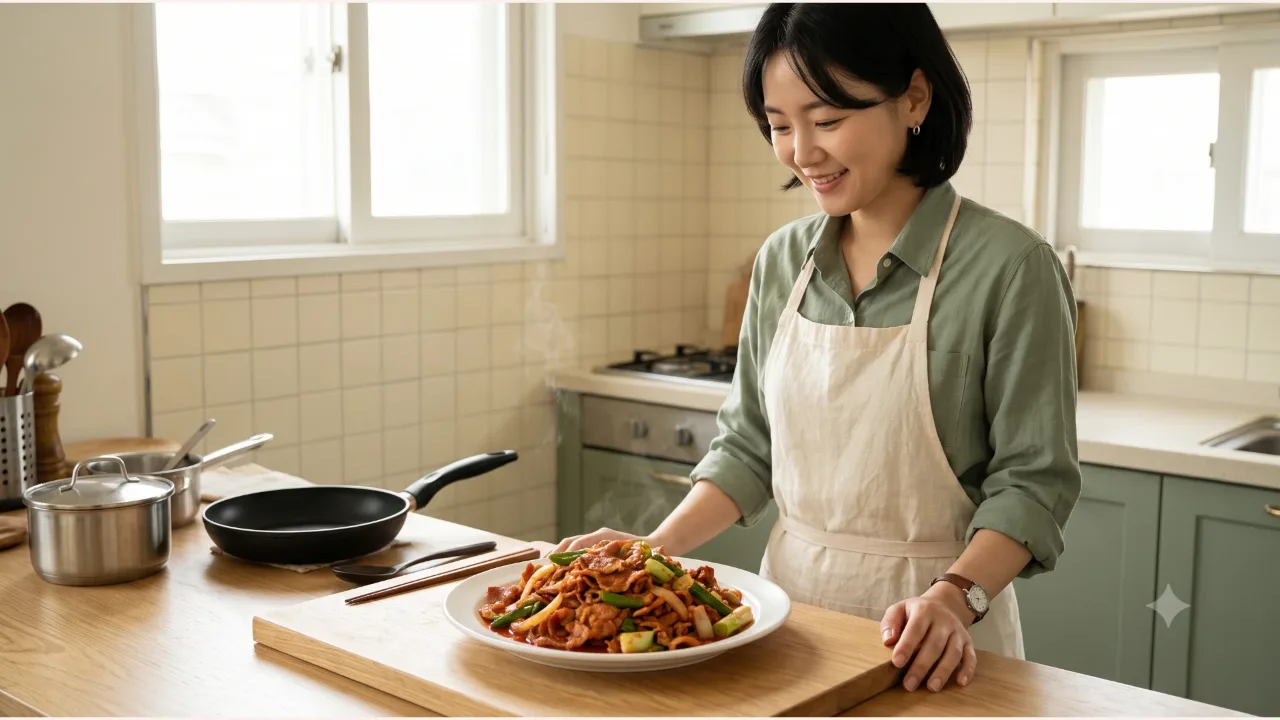
How do you cook it with the pork you have, and how do you balance the seasoning?
This makes 3 servings. Plan on about 20 minutes from prep to stir-frying. There is no marinating step.
Measurements: a tablespoon here means one level ordinary Korean table spoon (about 15 ml), and a teaspoon means one teaspoon (about 5 ml).
| Ingredient | Amount | Notes |
|---|---|---|
| Pork shoulder | 600 g | Thinly sliced, for stir-frying |
| Onion | 1 | Slice thinly |
| Green onion | 1 stalk | Slice on the diagonal |
| Cheongyang chili peppers (Korean hot green chilies) | 2 | Skip them if the heat is too much |
| Sugar | 2 tablespoons | Stir-fry with the meat first |
| Gochujang (Korean chili paste), soy sauce, gochugaru (Korean chili flakes) | 2 tablespoons each | Goes into the seasoning sauce |
| Minced garlic, oyster sauce, oligosaccharide syrup | 1 tablespoon each | Goes into the seasoning sauce |
| Cooking oil | 1 teaspoon | Only if the meat is lean |
Why is it easier to mix the seasoning sauce ahead of time?
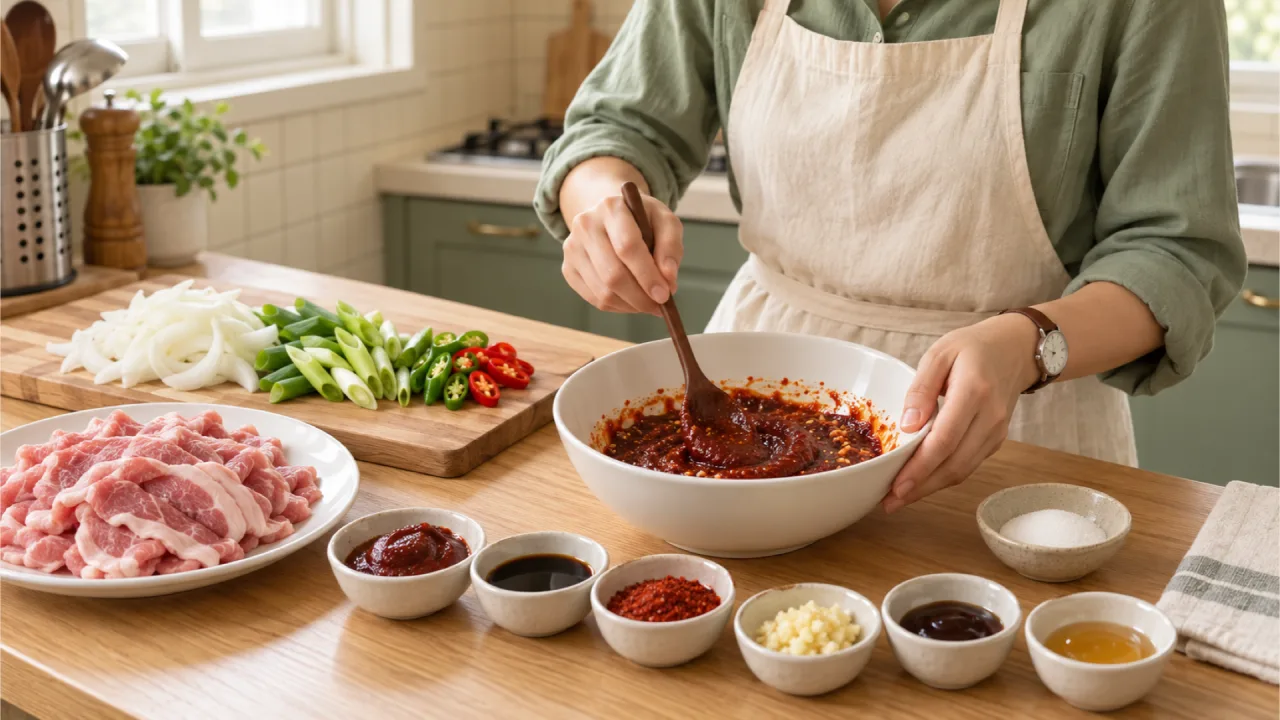
Mix the seasoning sauce in a small bowl before you turn on the heat. Put in 2 tablespoons each of gochujang, soy sauce, and gochugaru and 1 tablespoon each of minced garlic, oyster sauce, and oligosaccharide syrup, then stir until no gochujang lumps are left. Once the meat is cooking in the pan, you have no time to measure seasonings one by one, so having the sauce mixed lets you pour it in right after the sugar.
Don't put a spoon or chopsticks that touched raw meat back into the sauce bowl. Cover any leftover sauce, refrigerate it, and use it the same day.
How do you stir-fry it step by step?
- Keep the bowl of seasoning sauce you mixed earlier next to you and cut the meat and vegetables into bite-size pieces. Stir the sauce once and check that there are no gochujang lumps.
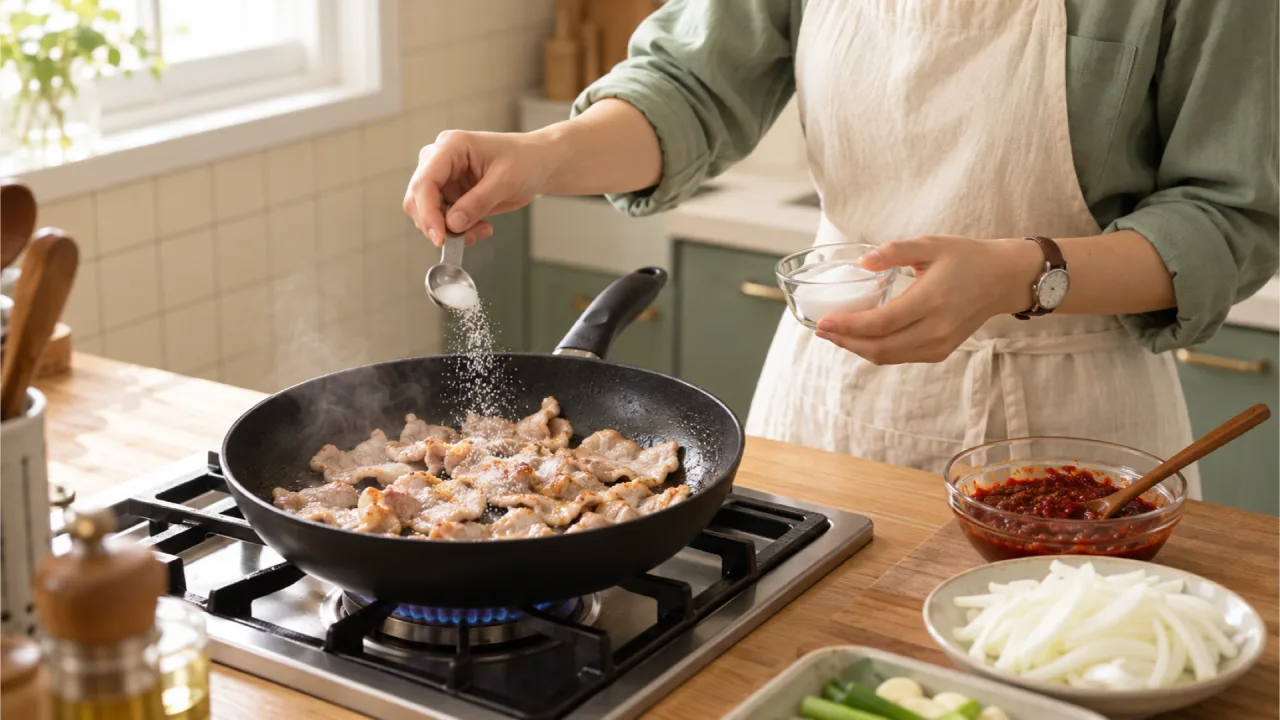
- Heat a pan over medium heat and spread out the meat to cook. If the pork shoulder sticks to the pan, add 1 teaspoon of cooking oil, and stir in the sugar as the surface starts to cook.
- Add the onion and the seasoning sauce and stir-fry over medium heat. If the sauce sticks to the bottom of the pan, lower the heat and add 1 tablespoon of water at a time.
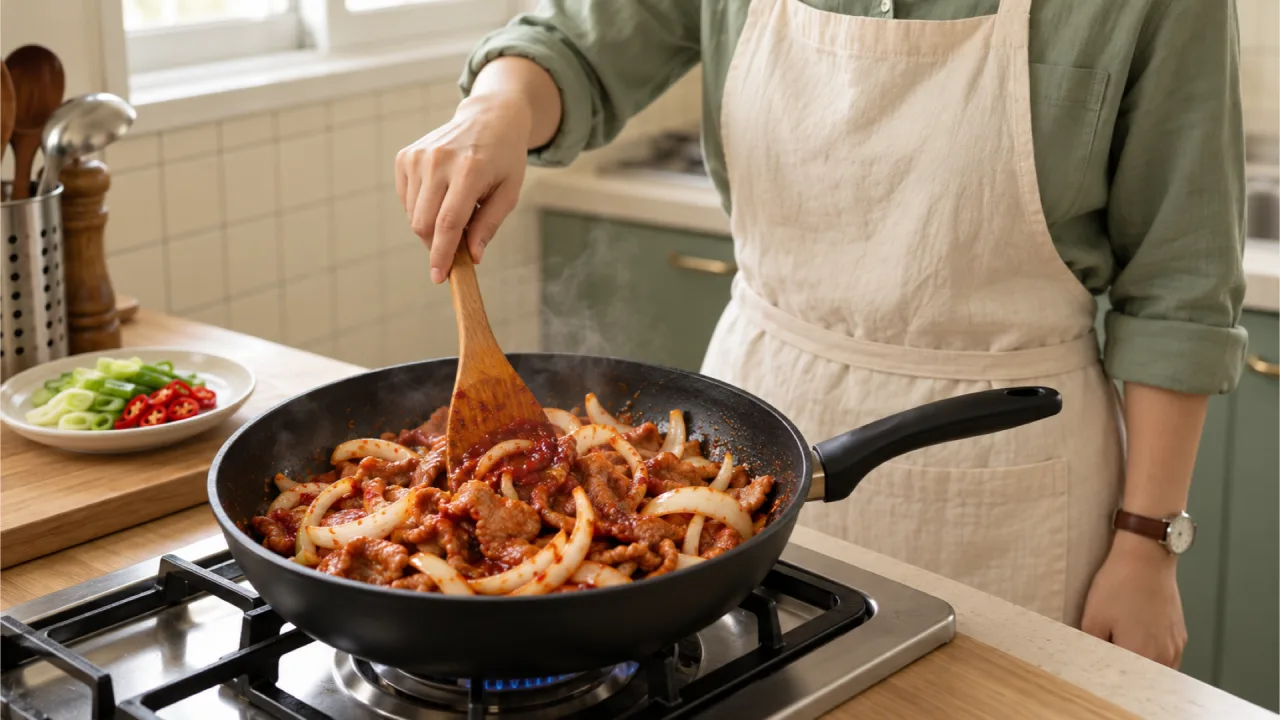
- When the onion softens, add the green onion and chili peppers and stir-fry together.
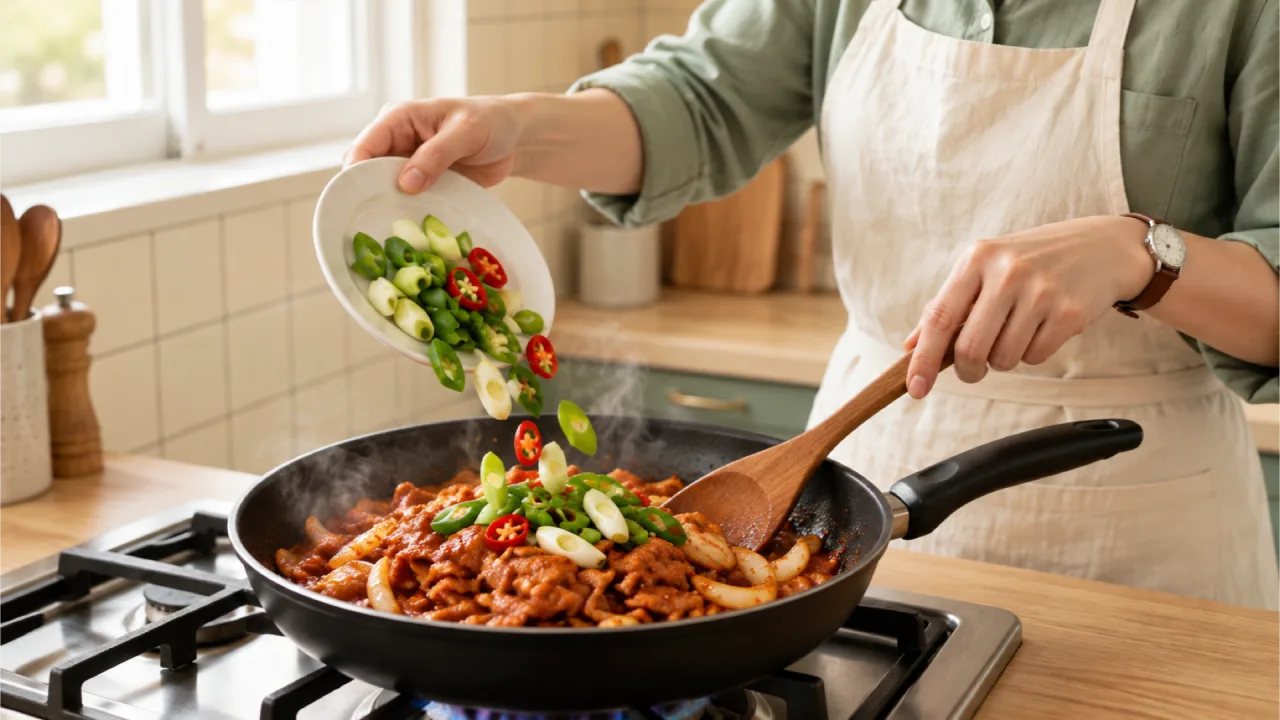
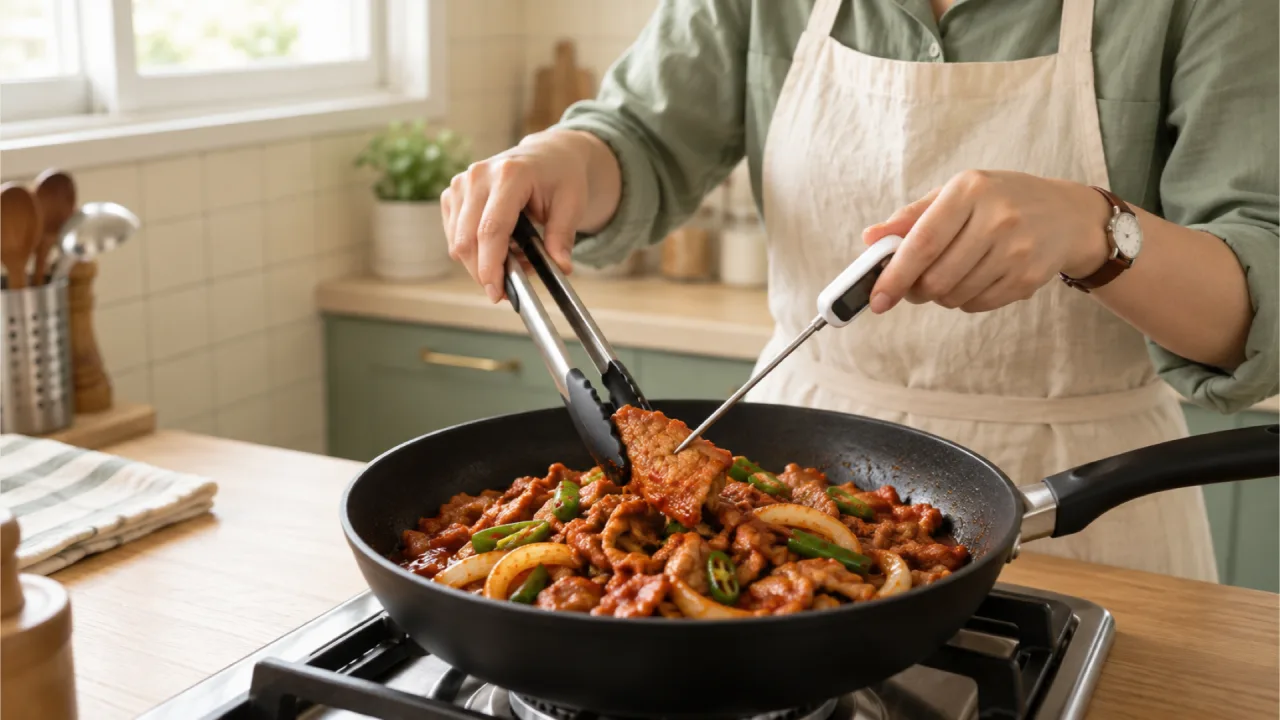
- If there is a lot of liquid, turn the heat up briefly to cook it off. Check that the thickest part of the meat has been cooked at a core temperature of 75°C or higher for at least 1 minute, then turn off the heat.
How do you avoid common mistakes?
- It can come out bland or salty, so adjust the soy sauce at the end.
- Both the oyster sauce and the soy sauce add saltiness, so you can hold back 2 tablespoons of the seasoning sauce at first, taste, and then add it.
- Don't judge pork by color alone. Cook the thickest part to a core temperature of 75°C or higher for at least 1 minute.
- Wash the cutting board and knife that touched raw meat separately.
What should you do with leftover jeyuk-bokkeum?
Let it cool, refrigerate it, and heat it until hot all the way through before you eat it.
How do you prepare the meat and pan so it cooks evenly?
Meat sliced for stir-frying can have thin pieces stuck together in layers. If you put it in the pan in the shape it came out of the package, the outside cooks while the stuck-together inside stays raw. Separate it into bite-size pieces when you prep, and spread the pieces out with tongs or a spatula once they are in the pan. Setting aside any unusually thick pieces beforehand also makes the final doneness check easier. Don't grab the seasoning bottles or the sesame jar with the hand you used on raw meat.
To stir-fry 600 g of meat in one go, a pan with a wide bottom and room to spread the meat out is easier to use. In a pot that is only deep with a narrow bottom, the meat piles up and liquid collects. If the pan gets too full, don't just turn up the heat. Separate the stacked pieces so they all touch the bottom evenly. Also, don't heat an empty pan for a long time before the meat goes in, to the point that it smokes.
Why add the sugar and the seasoning sauce separately?
This recipe doesn't marinate the meat in all the seasoning from the start. You cook the surface of the meat first and stir in the sugar, then add the onion and the prepared seasoning sauce. The order is meant to loosen up the meat pieces first while keeping the gochujang and gochugaru from hitting the bottom of the pan early and burning. After the sugar goes in, mix it evenly so it doesn't clump and stick in one spot.
Saltiness differs from one soy sauce and oyster sauce to another, and gochujang varies in sweetness and heat too. Holding back 2 tablespoons of the seasoning sauce before adding the full amount in the table makes it easier to adjust. Don't taste any seasoning that touched raw meat before the meat is fully cooked. When you add the remaining sauce after tasting at the end, mix it in well in the pan and cook it through.
How do you tell watery from sticking?
When the liquid from the onion and meat pools generously in the pan, it ends up more like a dish with sauce than a stir-fry. Adding soy sauce just because it looks watery can make it too salty once the liquid cooks down. First look at how cooked the meat is and how thick the sauce is, and only in the last 1 to 2 minutes turn the heat up to cook off the liquid. Doubling the amount won't finish in the same time in the same pan.
On the other hand, if the sauce turns thick and starts sticking to the pan, don't push through on high heat. As in the steps, lower the heat and add 1 tablespoon of water at a time until the spatula moves freely. If the bottom has burned black, avoid scraping and mixing that part in, and look for the cause in the heat level and how crowded the pan was. Don't stop cooking just because the color looks red or brown; check the thickest piece of meat.
How do you choose the cookware you need?
A wide pan that lets you spread out the pork shoulder is easiest to handle. Check the pan material and whether it works on induction, and have tongs ready so you can flip the meat without tearing it. Look ahead at the volume so you don't have to switch pans mid-cook once the vegetables go in.
Frequently Asked Questions
What if the jeyuk-bokkeum tastes bland or not sweet enough?
Taste the cooked meat first. If it is bland, add 1/2 tablespoon of soy sauce; if it needs more sweetness, add 1/2 tablespoon of sugar. Plum syrup has a different sugar and water content, so don't swap it in at the same amount.
A lot of liquid is coming out of the meat. What should I do?
Turn the heat up and stir-fry until the liquid cooks off. Not adding too much meat to the pan at once also helps.
Do I need to marinate the meat?
Not in this method. You cook the meat first, then add the sugar and the rest of the seasoning in turn.
Sources & Verification Date
- 10000 Recipe: Jeyuk-bokkeum recipe page · Verified
- Ministry of Food and Drug Safety: Food poisoning prevention guide · Verified
All materials have been verified from official announcements and may have changed since verification.