Got Spinach? Try Making Seasoned Spinach (Sigeumchi Namul)
Key Takeaway
With 1 bunch (approx. 280 g) of fresh spinach, you can make a neat dish of seasoned spinach namul in about 15 minutes.

Blanch it in boiling salted water for just 20 to 30 seconds, rinse in cold water, squeeze gently, and toss with soup soy sauce, minced garlic, and toasted sesame oil.
How do you cook it with the spinach you have, and how much do you need?
This makes 2 to 3 servings, perfect as a side dish alongside a bowl of rice.
Measurements: a tablespoon here means one level ordinary Korean table spoon (about 15 ml), and a teaspoon means one teaspoon (about 5 ml).
| Ingredient | Amount | Notes |
|---|---|---|
| Fresh spinach | 1 bunch (approx. 280 g) | Trim roots and rinse thoroughly |
| Coarse salt | 1 teaspoon | For the boiling water |
| Green onion | 1 stalk (1 tablespoon minced) | Finely minced |
| Soup soy sauce (guk-ganjang) | 2 teaspoons | Seasoning. Can substitute 1/2 teaspoon fine salt or 1 teaspoon tuna sauce |
| Minced garlic | 1 teaspoon | Seasoning |
| Sugar | 1/2 teaspoon | Seasoning. Softens any natural bitterness |
| Toasted sesame oil | 1 teaspoon | Drizzle at the very end |
| Toasted sesame seeds | 1 teaspoon | Sprinkle at the very end |
Why is it easier to mix the seasoning ahead of time?
Before blanching the spinach, mix 2 teaspoons of soup soy sauce, 1 teaspoon of minced garlic, and 1/2 teaspoon of sugar in a small bowl. If you add the seasonings individually directly onto the spinach, the garlic and sauce tend to clump onto one portion of leaves; mixing them beforehand ensures every bite is seasoned evenly.
Do not mix the 1 teaspoon of sesame oil and 1 teaspoon of sesame seeds into this bowl. Add them only after the spinach is thoroughly coated in the soy seasoning, so the fragrant nutty aroma stays distinct.
How do you make it step by step?
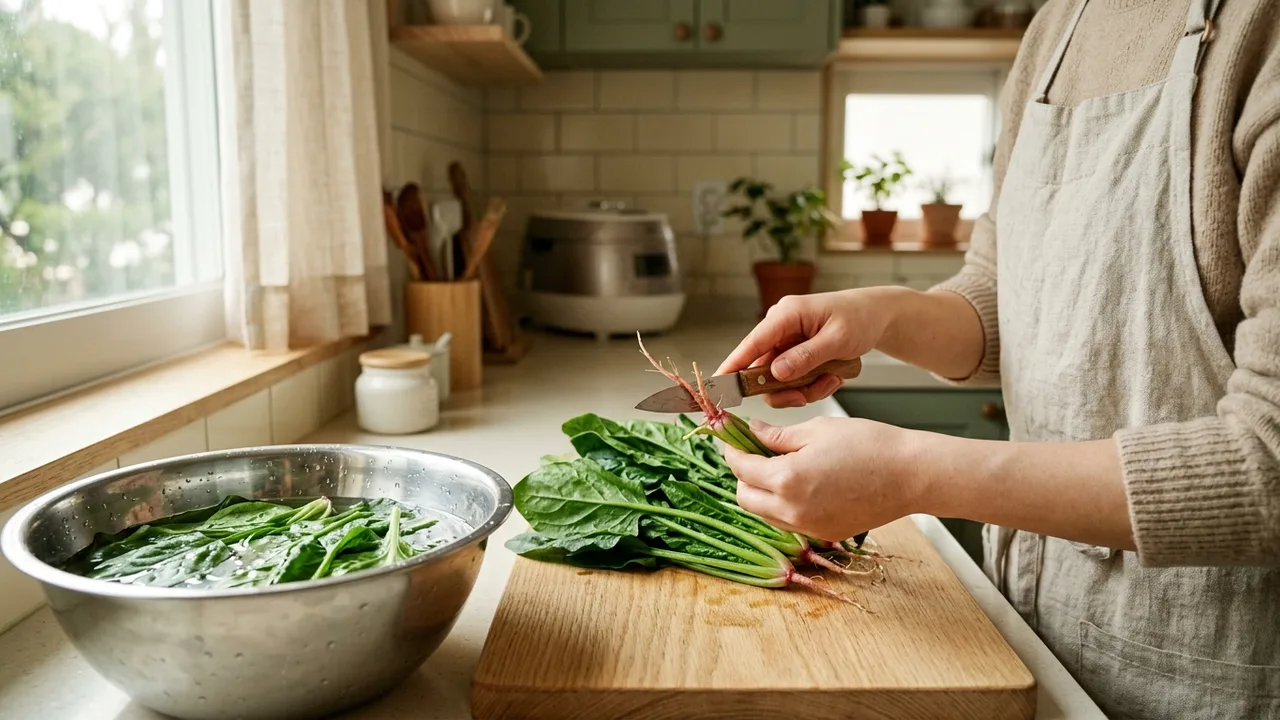
- Trim the root tips off the spinach with a paring knife, and split large bunches into 2 to 4 loose clusters. Swirl in cold water 2 to 3 times to rinse away any soil or grit, then drain.
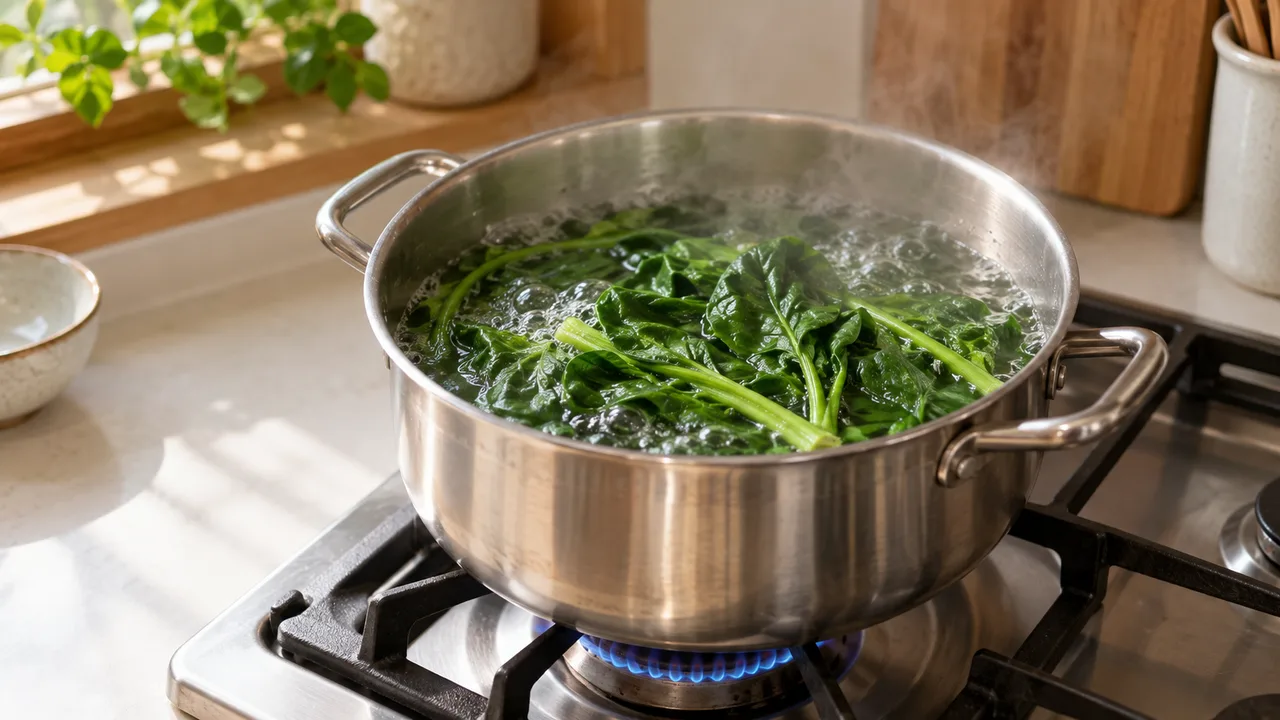
- Bring 1 liter of water to a rolling boil in a pot and add 1 teaspoon of coarse salt. Submerge the spinach stems first and gently press down with chopsticks for 20 to 30 seconds. As soon as the leaves soften slightly and turn vivid dark green, lift them out immediately.
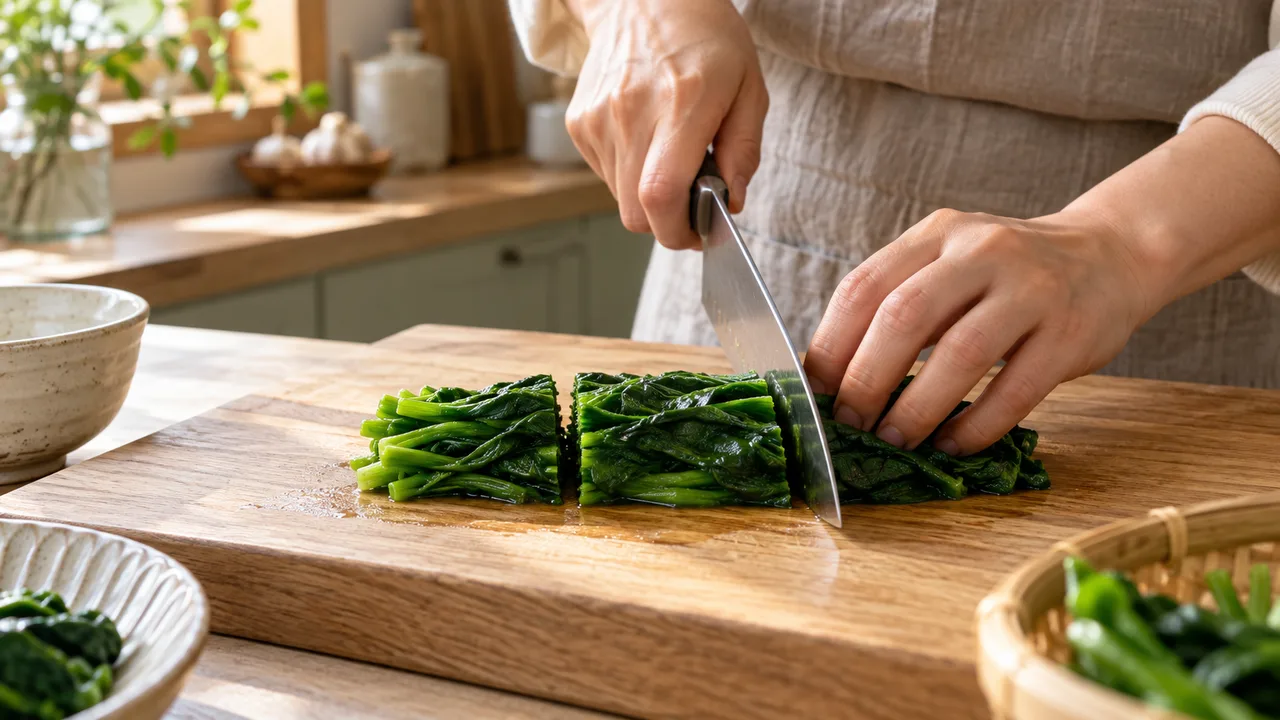
- Plunge the blanched spinach straight into cold water to halt the residual cooking. Once cooled, gather the spinach in both hands and press gently to expel excess water, then place on a cutting board and cut into 5 to 7 cm lengths (2 to 3 sections).
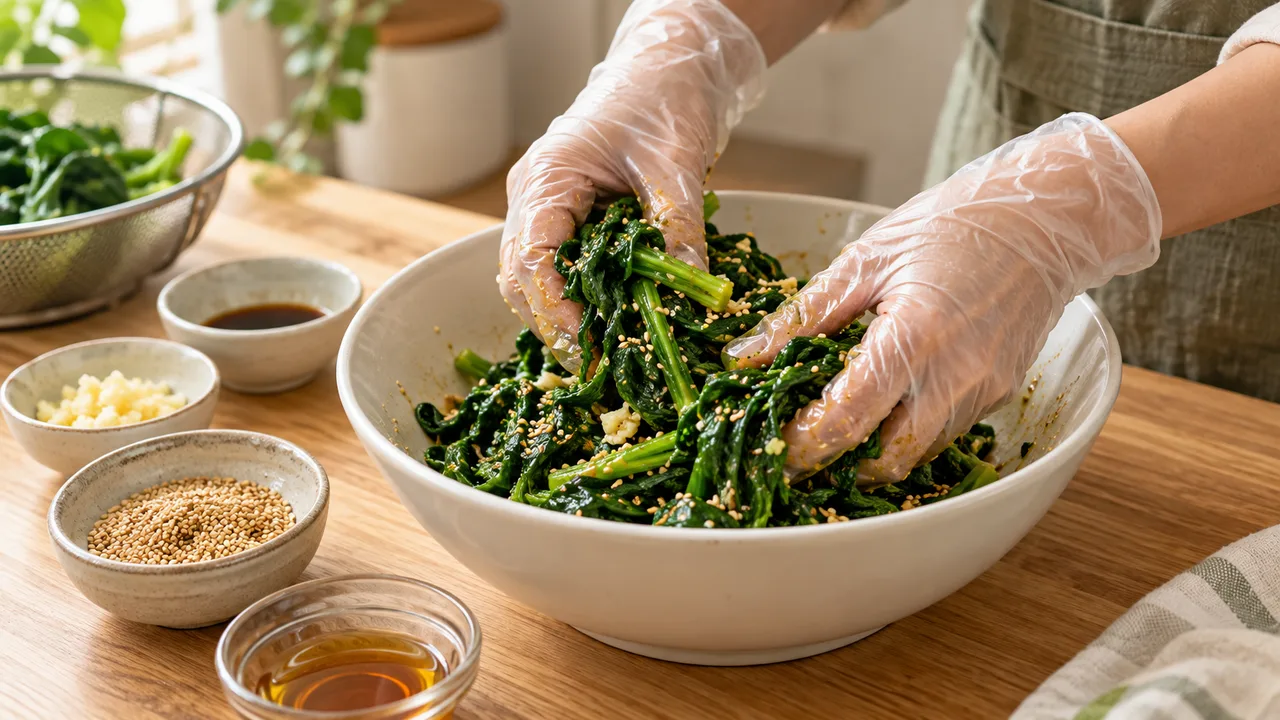
- Fluff the cut spinach into a wide bowl, loosening any clumped leaves. Add the prepared seasoning mix and 1 tablespoon of minced green onion, toss gently with gloved hands, then finish by drizzling 1 teaspoon of sesame oil and sprinkling 1 teaspoon of toasted sesame seeds.
What should you check to avoid mistakes?
- Do not blanch spinach for longer than 30 seconds. Because spinach leaves are thin, they turn soggy quickly; dropping them into boiling water, flipping once, and scooping them right out preserves their pleasant crunch.
- Shock them in cold water immediately after boiling. If residual heat lingers, the spinach continues cooking, turning yellow and mushy.
- Do not wring or twist the spinach forcefully. Squeezing out every drop of moisture makes the greens fibrous and dry; leave just enough moisture so water does not drip when cupped in your palm.
- Loosen the tangled leaves before tossing so that the seasoning penetrates evenly rather than sitting on the outer layer.
How do you store leftover sigeumchi namul?
Once completely cooled, transfer the seasoned spinach into an airtight container and refrigerate promptly. Because it is a moist vegetable side dish, it can turn sour if left at room temperature for extended periods.
Refrigerated sigeumchi namul is delicious on its own as a side dish, or topped onto warm rice alongside spicy radish salad or sweet and savory stir-fried anchovies with a spoonful of gochujang and sesame oil for bibimbap.
Frequently Asked Questions
Can I use regular or dark soy sauce instead of soup soy sauce (guk-ganjang)?
Regular soy sauce has a sweeter and darker profile that can darken the spinach's vibrant green color. If you do not have soup soy sauce, seasoning with 1/2 teaspoon of fine salt or 1 teaspoon of tuna fish sauce gives a cleaner appearance and taste.
How firmly should I squeeze the blanched spinach?
Cup the blanched spinach in both hands and press gently just until water stops dripping. Squeezing too hard bruises the tender leaves, making them stringy and pressing out the flavorful natural juices.
How long can I store leftover sigeumchi namul?
Store it in an airtight container in the refrigerator for 2 to 3 days. Because it is a moist seasoned vegetable dish, it spoils quickly at room temperature, so serve only what you plan to eat.